Für eine schnellere Antwort geben Sie bitte Ihre WhatsApp- oder Skype-Nummer in Ihre Nachricht ein, damit wir Sie so schnell wie möglich kontaktieren können.
Um uns eine schnellere Antwort zu ermöglichen, hinterlassen Sie bitte Ihre WhatsApp-Nummer, E-Mail oder Projektdetails. Wir antworten normalerweise innerhalb von 24 Stunden. Bei dringenden Anfragen kontaktieren Sie uns über WhatsApp: +8617862411260 oder WeChat: +8617862411260. Rufen Sie uns direkt an.
A search for “silo towers” mostly returns agricultural grain storage. In dust collection, a tower silo is a vertical, cylindrical storage vessel that sits downstream of a centralized collector and holds captured dust until it’s discharged or hauled away. Specifying one means balancing diameter, height, discharge clearance and available floor space against the plant’s actual dust volume.
Grain and feed silos are built for bulk agricultural material moved in large batches. Industrial dust silos serve a different job: they receive a continuous, lower-density stream from a dust collector’s discharge point, not a periodic bulk fill. That changes the design priorities. Wall angle, discharge cone geometry and access for cleanout matter more than raw bushel capacity. Senserui’s DC Series Intelligent Modular Tower Silo (DC30 through DC100) is built specifically for this role — paired with a centralized collector rather than standing alone.
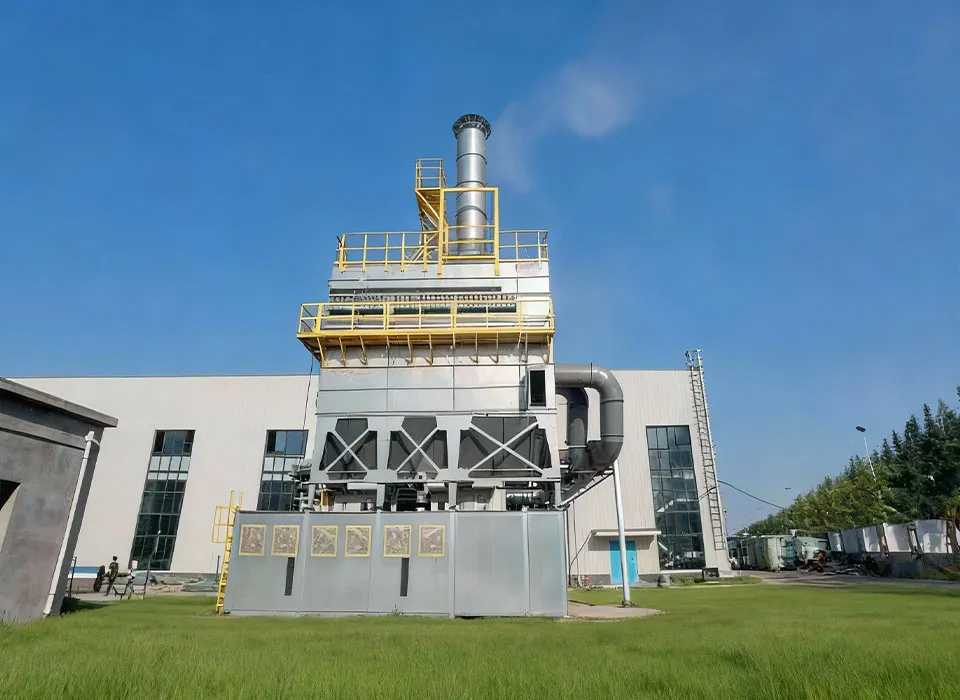
The published parameter range for the DC Series covers five models, DC30 through DC100. The manufacturer publishes a range across the series rather than a full breakdown for each individual model:
| Parameter | Published Range |
|---|---|
| Rated Power | 5–15 kW |
| Storage Capacity | 30–100 m³ |
| Diameter | 2,400–4,500 mm |
| Height | 10,000–18,000 mm |
The model numbers (30, 70, 80, 90, 100) line up closely with the capacity range in m³, which suggests the designator tracks nominal storage volume. That correspondence isn’t stated outright on the reviewed product page, so treat it as a likely convention rather than a confirmed spec — confirm the exact figure for your model before finalizing a layout.
One structural note worth flagging early: the DC Series is described as designed with reference to relevant national and EU standards, but no specific product certificate number is published for it. If your project needs a certificate on file for insurance or permitting purposes, that has to be requested and verified separately — it isn’t something you can assume from the product page.
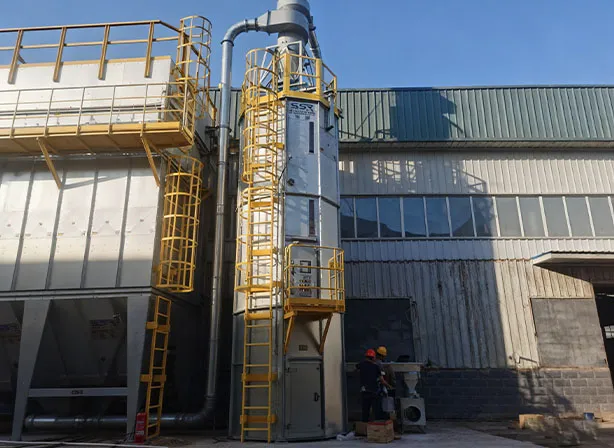
A silo’s footprint is fixed by diameter; its capacity scales with both diameter and height. Two silos with the same 100 m³ rating can have very different footprints depending on whether the design leans wide-and-short or narrow-and-tall. For plants with a low roof line or overhead crane clearance, a wider base with less height often wins even at the same capacity. For plants tight on floor space near the collector, a taller, narrower unit frees up ground area but adds structural load and requires taller access platforms for maintenance.
Discharge height matters separately from overall height. If the silo feeds directly into a truck, a bin, or a screw conveyor, the clearance beneath the discharge point has to match that equipment — not just fit within the building.
A common specification mistake is treating the rated storage capacity as the number to plan around for fill intervals. In practice, usable capacity runs below rated volume once you account for the discharge cone geometry and the safety margin operators build in to avoid running a silo to its structural limit before scheduled emptying. Plants that spec exactly to their calculated daily dust volume, with no margin, end up with more frequent emergency discharges than planned — which defeats the point of installing a silo in the first place. Sizing conservatively against projected volume, not against the nameplate number, avoids that.
Combustible dust storage carries fire and explosion risk that depends heavily on the material being stored — wood dust, metal fines and organic powders each behave differently once concentrated in a confined vessel. NFPA 660, the consolidated standard for combustible dusts and particulate solids, is the primary U.S. reference for evaluating that risk and determining what protective measures a given storage vessel needs.
For silo towers specifically, the safety features to specify typically include:
Senserui’s MS Series square dust bin, a separate product line from the DC tower, publishes these same four categories of protection — explosion relief, fire suppression, temperature monitoring and water-pressure monitoring — as standard features. The equivalent detail isn’t broken out separately for the DC Series on the reviewed page, so if these are must-have requirements for your plant, confirm them directly against the DC Series documentation rather than assuming parity between the two product lines.
Equipment intended for potentially explosive atmospheres is generally described in this industry as designed based on ATEX principles, referencing the EU’s Directive 2014/34/EU framework — not as formally ATEX-certified, unless an actual certificate has been issued and can be produced on request.
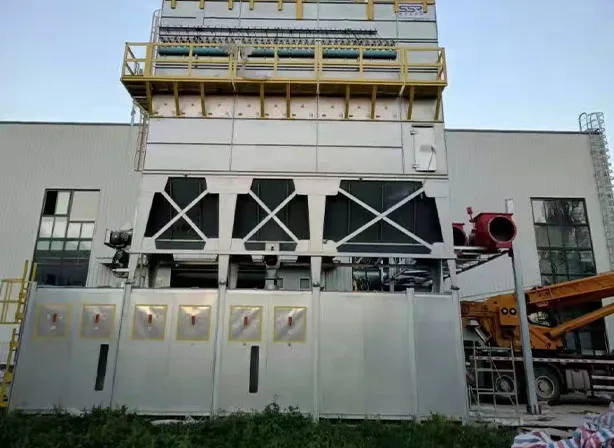
Compared to a field-erected bolted design assembled from separate flat panels on-site, a modular vertical silo generally arrives closer to complete and needs less on-site fabrication — mainly module stacking and connection. Whether a tower or a square bin fits your plant better usually comes down to available floor plan more than dust volume:
Neither is universally better. A plant with 4-meter ceiling clearance and open floor space around the collector is usually a poor fit for a tower design regardless of capacity math.
Available on request based on system configuration and project requirements. Senserui doesn’t publish fixed or model-specific price ranges for the DC Series; final cost depends on capacity, structural specification and safety features selected for the site.
The DC Series is built to pair with a centralized collector’s discharge point, so retrofitting is a matter of ducting and structural compatibility with the existing system rather than a full system rebuild. Site-specific verification is needed to confirm your current collector’s discharge configuration matches.
Available vertical clearance and floor footprint are the deciding factors more often than dust volume. A constrained floor plan with adequate ceiling height favors a tower; open floor space with a lower roof line favors a square bin.
Not necessarily at the same diameter comparison point — capacity is a function of both diameter and height together, and usable capacity runs below the rated figure once discharge cone geometry and operating margin are factored in.