Für eine schnellere Antwort geben Sie bitte Ihre WhatsApp- oder Skype-Nummer in Ihre Nachricht ein, damit wir Sie so schnell wie möglich kontaktieren können.
Um uns eine schnellere Antwort zu ermöglichen, hinterlassen Sie bitte Ihre WhatsApp-Nummer, E-Mail oder Projektdetails. Wir antworten normalerweise innerhalb von 24 Stunden. Bei dringenden Anfragen kontaktieren Sie uns über WhatsApp: +8617862411260 oder WeChat: +8617862411260. Rufen Sie uns direkt an.
Senserui does not publish a fixed price for industrial dust collectors because airflow volume, duct routing, filtration stage, explosion protection and control automation each shift the number independently. This piece breaks a typical quotation into those variables and shows which ones move the total the most, so a request for quote reads as data instead of a mystery.
Ein dust collection system is not a shelf item. Two plants with identical square footage can need very different equipment depending on what their machines throw into the air, how far that air has to travel, and what happens if a spark reaches it. Senserui’s production side reflects that: 20+ lines running CNC laser cutting and hydraulic press-brake work, modular pre-assembly, and in-house airflow, noise and filter testing before a unit ships. Pricing is built the same way a duct network is — starting from source conditions, not from a catalog page.
Compared with programs that publish a single bundled price band up front, a configuration-based quote takes longer to arrive but tracks closer to what actually ships. The trade-off is real: a buyer comparing three suppliers on speed alone will find the vaguest quote fastest and the most accurate one last.
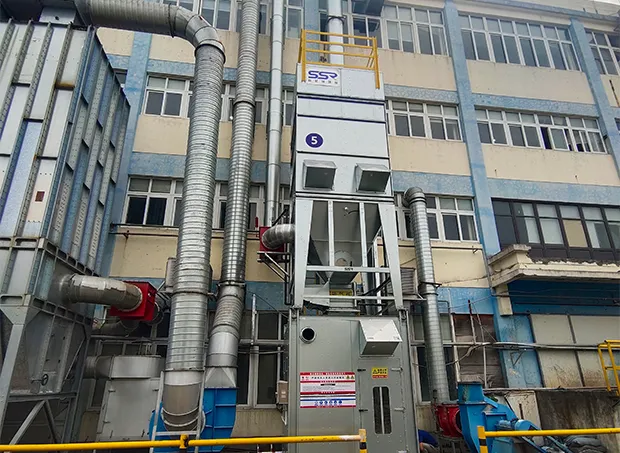
| Cost Driver | What It Affects | Why It Matters |
| Airflow & fan power | Motor size, mainframe series (S vs CC/CP/CZ tier) | Larger airflow requirements move the base unit into a higher power bracket |
| Duct network length & routing | Static pressure the fan must overcome | A short straight run and a long run with multiple elbows can require different fan sizing at the same nominal CFM |
| Filtration stage | Media type, replacement schedule | Fine/ultrafine dust (CP-type applications) generally demands tighter filtration than medium/large-particle dust (CC-type applications) |
| Explosion & fire safety hardware | Spark detection, chain-break detection, explosion relief, emergency-stop | Combustible dust processes add a hardware layer that non-combustible processes may not need |
| Automation & monitoring | Differential-pressure sensors, IoT-based monitoring | Adds equipment and integration cost but reduces manual inspection labor over time |
| Storage / silo sizing | MS square silo or DC modular tower selection | Quoted as a separate line from the mainframe, sized to production volume rather than airflow |
| Installation & commissioning scope | On-site labor, testing, handover | Whether this is bundled into the quote or billed separately changes what the number in front of you represents |
None of these seven line items is decorative. A quote that changes on any one of them is doing its job correctly, not padding a number.
Buyers often assume that matching the rated airflow (m³/h) of two systems means the price should match too. It usually doesn’t. Static pressure loss from duct length, bends, and elevation changes how hard the fan has to work to deliver that airflow at the workstation, not just at the mainframe inlet. A 60,000 m³/h system feeding a compact, straight duct run and a 60,000 m³/h system feeding a long run with several 90-degree bends are not the same fan selection — and they are not the same price, even though the headline number on both spec sheets reads identically.
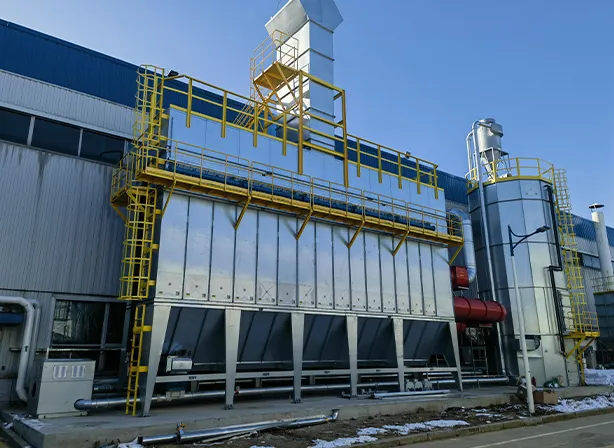
Senserui’s three centralized mainframe lines share overlapping power and airflow ranges but are built for different dust conditions, which is where their cost baselines diverge before ductwork or safety hardware is even added.
| Series | Primary Focus | Rated Power | Airflow | Footprint (L × W × H) | Noise | Notes |
| CC30–CC150 | Medium/large-particle dust (woodworking, cement, building materials) | 30–150 kW | 30.000–150.000 m³/h | ~3,500–13,000 × 2,400 × 8,500 mm | <80 dB | Published emission target <5 mg/m³ under suitable system conditions |
| CP30–CP150 | Fine/ultrafine dust (sanding, CNC, powders, battery materials) | 30–150 kW | 30.000–150.000 m³/h | ~3,500–13,000 × 2,400 × ~7,000 mm | <80 dB | Published emission target <5 mg/m³ |
| CZ30–CZ150 | Heavy-duty metalworking (welding, cutting, grinding, spark-prone loads) | 30–150 kW | 30.000–150.000 m³/h | ~3,500–13,000 × 2,400 × 8,500 mm | ≤80 dB | Spark detection, chain-break detection, explosion relief, emergency-stop noted as standard safety features |
The overlap in power and airflow ranges is intentional — these are sizing brackets, not price brackets. What separates a CC120 quote from a CZ120 quote at the same nominal airflow is filtration targeting and, for CZ, the safety hardware built around spark-prone particulate.
CZ-Serie pricing includes hardware that CC und CP do not carry by default: spark detection, chain-break detection, explosion relief, and emergency-stop protection. On a metal fabrication or welding line, that hardware is not an upsell. NFPA 660, the National Fire Protection Association’s standard for combustible dusts and particulate solids, is the reference point most U.S. facilities use to determine what explosion-protection measures a given dust hazard actually requires. Senserui’s system design for these applications is described as based on ATEX principles, matching the safety logic the standard addresses, rather than as a certified rating — Senserui does not publish a product-specific ATEX certificate, so that distinction matters when you’re comparing quotes line by line.
The upside of pricing this hardware in from the start is fewer surprise change orders once a fire-code reviewer looks at the layout. The downside is upfront: a CZ-tier quote for a spark-generating process will read higher than a CC-tier quote of the same airflow for wood dust, and that gap doesn’t shrink no matter how the rest of the system is negotiated.
A: Price: Available on request based on system configuration and project requirements. Airflow, duct layout, filtration stage, safety requirements, and automation level all change the number, so a fixed catalog price would either overstate simple installations or understate complex ones.
A: Senserui does not publish a fixed range, and this article won’t invent one either. The honest answer is that a like-for-like comparison only works once you have specifics — the seven variables above — in hand. Requesting a quote with your airflow estimate, duct sketch, and safety classification is the fastest way to get a real number instead of a placeholder one.
A: One item worth tracking: ISO has released ISO/FDIS 9001, with the new edition expected to replace ISO 9001:2015 in September 2026. That’s a quality-management-system update, not a pricing change, but if your procurement process references a specific ISO edition, it’s worth confirming which edition applies at the time you request your quote.
A: This varies by project scope and isn’t standardized in published materials, so confirm it directly when you request pricing — ask specifically whether installation supervision and commissioning testing are inside or outside the figure you’re given.
A: The timeline depends less on Senserui’s internal turnaround than on how complete your airflow and layout data package is when you submit it. Missing duct routing or an unconfirmed safety classification is the most common reason a quote goes through a revision round before it’s final.