Để có phản hồi nhanh hơn, xin vui lòng bao gồm số WhatsApp hoặc Skype của bạn trong tin nhắn của bạn để chúng tôi có thể liên lạc với bạn càng sớm càng tốt.
Để giúp chúng tôi phản hồi nhanh hơn, xin vui lòng để lại WhatsApp, email hoặc chi tiết dự án của bạn. Chúng tôi thường phản hồi trong vòng 24 giờ. Đối với các yêu cầu khẩn cấp, liên hệ với chúng tôi qua WhatsApp: +8617862411260 hoặc WeChat: +8617862411260. gọi cho chúng tôi trực tiếp.
Metal dust does not stay in one place. It spreads from each machine, enters the air, settles on surfaces, and creates cleaning, safety, and quality problems. If your team keeps wiping the same dust every shift, you need a better dust collection plan.
A metal dust collection system captures metal dust, grinding dust, welding fume, oil mist, and fine particulate near the source. It uses hoods, ducts, a dust collector, filter media, airflow control, and safe discharge to improve clean air, protect workers, reduce downtime, and support metalworking productivity.
A metal dust collection system is a complete air filtration and dust removal setup for metalworking processes. It helps capture metal dust, grinding dust, welding fume, and metallic dust before these particles spread across the workshop. A full dust collection system may include capture hoods, extraction arms, downdraft tables, ductwork, fans, a dust collector, cartridge filter elements, HEPA final filtration, and monitoring controls.
In simple terms, the system pulls dirty air away from the work area. Then the dust collector separates dust and fumes from the air through filtration. Cleaner air is discharged outside or returned indoors when local rules and system design allow it. For industrial environments, the goal is not only a cleaner floor. The goal is safer production, better product quality, and more stable machine operation.
At Senserui China, we see metal dust collection as part of factory air pollution control. A metal shop may also need welding fume extraction, oil mist control, VOCs treatment, or a smoke collection system. When these systems work together, the plant gets cleaner air and better long-term operating control.
Metal dust collection matters because metalworking shops create dust every day. Cutting, grinding, sanding, blasting, polishing, deburring, weld preparation, and metal finishing all create dust and fumes. Some particles are large and fall quickly. Some fine dust stays airborne and moves with airflow. That fine dust can enter the breathing zone, settle on a machine, or reach electrical panels.
Poor dust collection can reduce productivity. Workers clean more often. Filters on machines clog faster. Sensors may become dirty. Finished parts may need extra cleaning before coating or assembly. Dust can also cause downtime when it enters moving parts, fans, bearings, or control cabinets.
A high-quality dust collection system helps factories control dust at the source. It improves indoor air quality, supports workplace safety, and makes the work environment look more professional during customer visits. Clean production tells buyers something important: this factory controls its process.
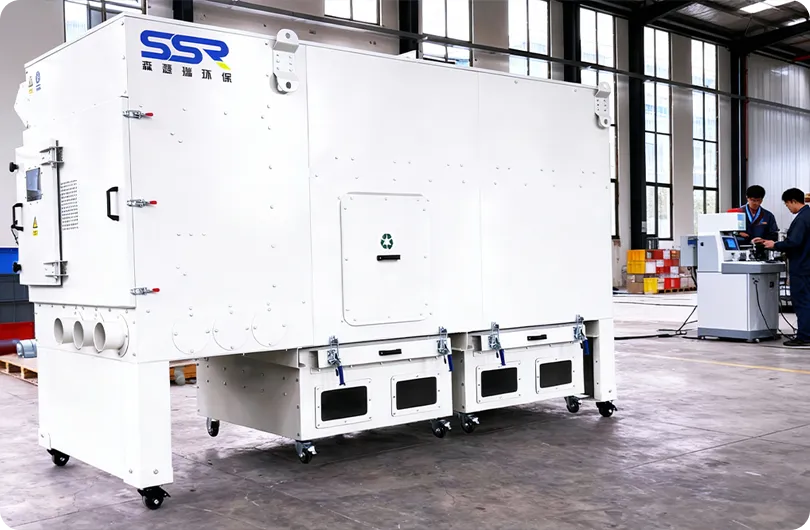
Different metalworking processes create different dust. That is why the type of metal dust matters before choosing a dust collector. Steel dust, stainless steel fume, aluminum dust, zinc-coated metal fume, laser cutting smoke, oil mist, and abrasive dust do not behave the same way.
Common dust and fume sources include:
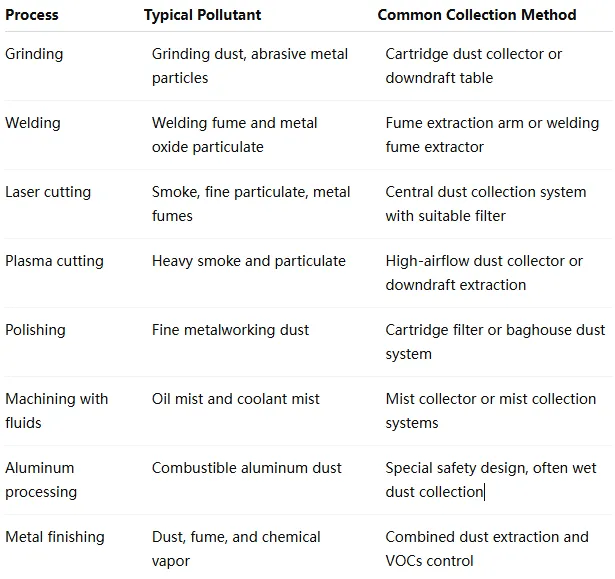
A machinist may only see visible dust near the machine. But the smallest particles often create the larger risk because they remain airborne longer. For that reason, metal dust extraction should be planned around the dust source, the dust particle size, and the real airflow path in the workshop.
A metal dust collector works by pulling dusty air from the process, sending it through a filtration system, and collecting dust in a bin, tray, hopper, or safe discharge container. The dust collector may use cartridge filters, filter bags, cyclone pre-separation, wet dust capture, or a combined design.
A typical dust collector working flow looks like this:
Metalworking Machine
↓
Capture Hood / Extraction Arm / Downdraft Table
↓
Dust Extraction Duct
↓
Metal Dust Collector
↓
Filter / Cartridge / Baghouse / Wet Separation
↓
Clean Air Outlet
↓
Collected Dust Discharge
The filter is the heart of most dry collector systems. Dirty air passes through the filter media, while dust particles stay on the surface. A cleaning system may use compressed air pulses to remove dust from the cartridge filter or filter bags. This keeps airflow stable and helps reduce pressure drop.
A good dust collector is not only strong. It must be matched to the process. The wrong dust collector may clog, leak dust, consume too much energy, or create a safety hazard. This is why Senserui always recommends reviewing the process before selecting dust collection equipment.
There is no single best dust collector for every metal working process. The right choice depends on the dust type, dust loading, spark risk, airflow, operating hours, and maintenance needs.
For grind operations, a cartridge dust collector is often practical because grinding dust can be fine and dry. For heavy grinding or abrasive dust, a pre-separator or cyclone may help protect the filter. For weld operations, welding fume extraction arms, fume extraction systems, or a central dust collector may be used, depending on whether the welding area is fixed or flexible.
For metal cutting, especially laser or plasma cutting, the dust collection system must handle smoke, heat, sparks, and fine particulate. A downdraft table may capture dust and fumes under the cutting bed. For polishing, the system must catch fine metalworking dust before it spreads across the shop.
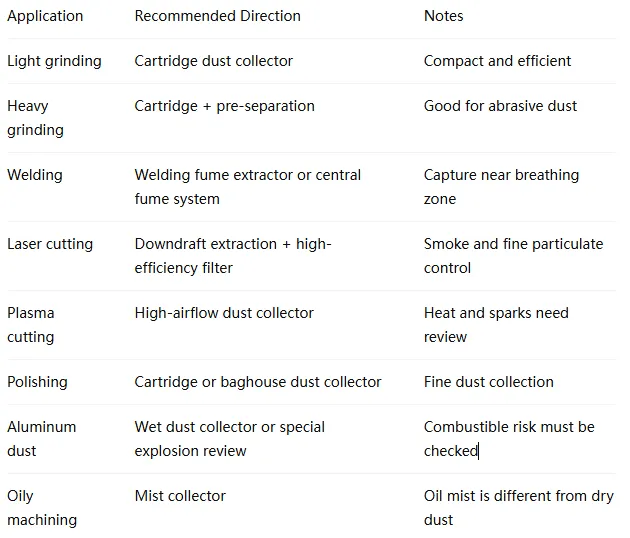
A good metal dust collection design often uses different capture methods in different areas. One metalworking plant may need both a welding fume extractor and a metal dust collector. It may also need a mist collector for CNC machining fluids.
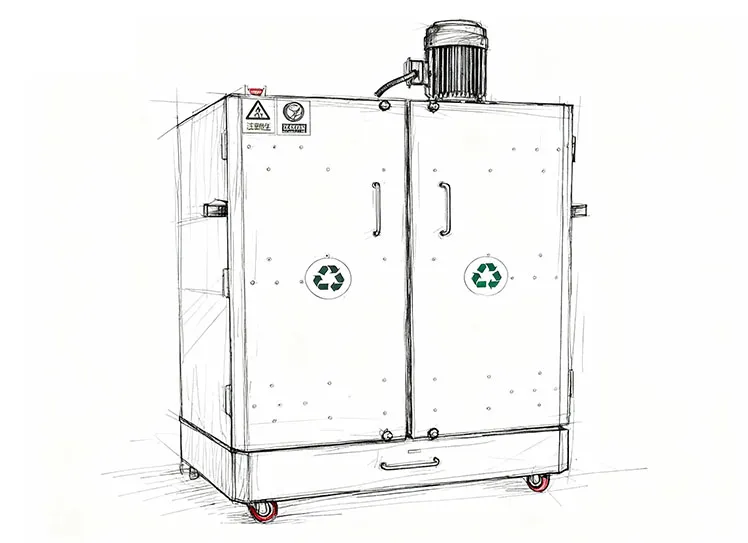
Metal dust collector systems can use several filtration and separation technologies. Each one has a job.
A cartridge filter dust collector uses pleated cartridges. The pleated shape gives a large filter area in a compact machine. This is useful for fine dust, welding smoke, and general metalworking dust collection. In some applications, HEPA final filters may be added when higher-efficiency air filtration is required.
A baghouse dust collector uses long filter bags. Baghouse dust collection can work well for larger air volumes and heavier dust loading. A cyclone separates larger or heavier particles before they reach the main filter. It is useful when dust is abrasive or when the system needs to reduce load on the final filter.
A wet dust collector uses water to capture dust. Wet dust collection may be considered for some combustible metal dust applications, such as aluminum or magnesium dust, but the design must follow proper safety review. It is not just a tank with water. It needs correct airflow, sludge handling, corrosion control, and maintenance.
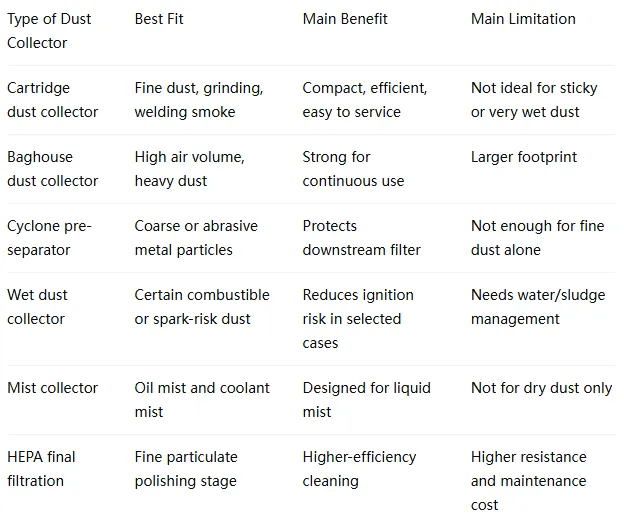
The best type of dust collection equipment should match the real dust characteristics. For example, dry grinding dust and oil mist should not be treated as the same pollutant.
Welding fume is not the same as ordinary shop dust. It forms when metal vapor cools and becomes very small particulate. Welding fume can contain different metals depending on base metal, filler metal, coating, and welding method. OSHA warns that welding fumes may create serious health hazards, and NIOSH notes that local exhaust ventilation can help remove fume away from the work area.
Oil mist is different again. It comes from metalworking fluids used in CNC machining, turning, milling, drilling, and grinding with coolant. OSHA’s metalworking fluid manual discusses engineering controls such as machine enclosures and local exhaust ventilation to reduce exposure to metalworking fluid mist. A mist collector or mist collection system is usually better for oil mist than a standard dry dust collector.
Metalworking dust is the broader group. It can include steel dust, stainless steel dust, aluminum dust, grinding dust, polishing dust, and abrasive particles. Some metalworking dust collectors can handle several dry processes, but the system should be reviewed carefully if the plant has both dust and fumes or both dust and oil mist.
Metal dust can create health risks and safety hazards. Fine particulate may enter the breathing zone. Welding fume may contain toxic metal compounds. Some metals, coatings, and additives can be harmful to workers’ health when exposure is not controlled.
OSHA regulations and guidance for welding, cutting, brazing, metalworking fluids, and combustible dust show why engineering controls are important. A good dust collection system helps reduce exposure by capturing dust at the source. It is not the only safety measure, but it is often a key part of the control plan.
Combustible metal dust is another major issue. OSHA notes that even materials that do not burn in larger pieces, such as aluminum or iron, may become explosible in dust form under the right conditions. NFPA guidance on combustible metals is often used by safety professionals when reviewing metal dust collection systems. For factories handling aluminum dust, magnesium dust, or mixed fine metal powder, safety review is essential.
Important safety concerns include:
The message is simple: do not treat metal dust as “just dirt.” It may be a process, health, and fire safety concern.
A metal dust extraction system should start at the dust source. Engineers should ask where dust is created, how fast it moves, whether sparks are present, how much air is needed, and how workers use the machine. A strong fan alone cannot fix poor capture design.
Good system design should include:
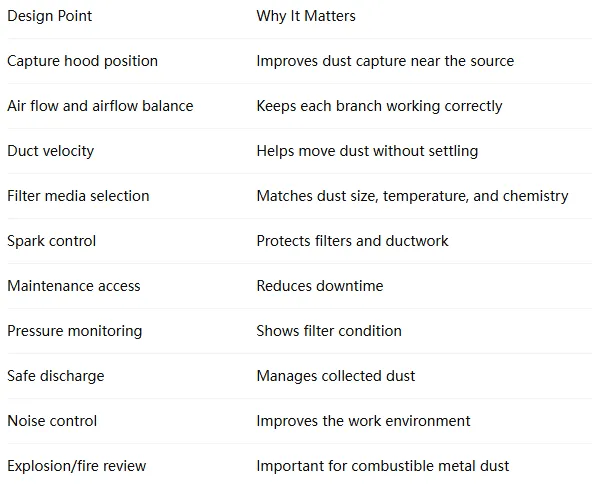
For many metalworking shops, the best design is a combination of local capture and centralized dust collection. Fixed machines may connect to a central system. Flexible weld areas may use mobile extraction arms. CNC machining may use mist collectors. Grinding booths may use downdraft or backdraft capture.
Senserui China can help buyers evaluate the process and choose a practical metal dust collection system design. We focus on dust control, air pollution control, filtration, safety, and long-term operating cost.
Clean air is not only about compliance. It also affects how people feel and how machines run. When dust collection works well, workers can see better, breathe cleaner air, and spend less time cleaning. Machines stay cleaner. Finished parts look better.
A factory with poor dust collection often loses time in small ways. Operators wipe worktables. Maintenance teams clean control panels. Filters clog. Coated parts need rework. Visitors notice dust. These small problems reduce productivity.
A high-quality dust collection system can support:
For overseas buyers, these benefits matter because labor cost, compliance pressure, and customer audits are real business concerns. A stable metal dust collector is not only equipment. It is part of a better production system.
Senserui China is a Chinese industrial environmental equipment manufacturer specializing in industrial dust collection and VOCs treatment. We serve medium- to large-scale manufacturers, environmental engineering contractors, system integrators, distributors, and importers across Europe, North America, the Middle East, Southeast Asia, and Latin America.
For metalworking shops, Senserui can support dust collection solutions for grinding, cutting, polishing, welding fume, oil mist pre-treatment, abrasive dust, and metal finishing exhaust. We can help design industrial dust collection systems based on dust source, workshop layout, airflow needs, safety requirements, filter selection, and maintenance plans.
Our support may include:
Senserui does not act like a one-time equipment trader. We focus on engineering design, factory-direct supply, customization, modular system layout, monitoring, and long-term service. That is why our systems are suitable for industrial manufacturers and project contractors who need reliable performance.
Before requesting a quotation, prepare clear project information. This helps the supplier select the correct dust collector and avoid wrong sizing.
Recommended checklist:
The more complete the information, the better the final dust collection system will be.
A metal dust collection system captures dust, fume, and particulate from metalworking processes such as grinding, cutting, welding, polishing, and finishing. It uses hoods, ducts, a dust collector, filters, and fans to remove dust from the air and improve clean air in the workshop.
A cartridge dust collector is often a good choice for metal grinding because it provides efficient filtration in a compact machine. For heavy grinding dust or abrasive dust, a cyclone pre-separator or larger baghouse system may be considered.
No. Welding fume is made of very small particles formed when metal vapor cools. Metal dust usually comes from mechanical work such as grinding, cutting, sanding, or polishing. Both need proper capture, but the system design may be different.
Some metal dust can be combustible. Aluminum, magnesium, and some fine metal powders may create dust explosion risks under certain conditions. A safety review should be done before selecting a dry dust collector for combustible metal dust.
Some shops may need HEPA final filtration when fine particulate control is required, especially where air is recirculated or where stricter indoor air quality goals apply. The need depends on the process, dust type, local rules, and system design.
Yes. Senserui Trung Quốc specializes in industrial dust collection and VOCs treatment. For complex metalworking shops, Senserui can help plan dust collection, welding fume extraction, mist collection systems, pre-filtration, and VOCs treatment as a combined air pollution control solution.