Daha hızlı bir yanıt almak için lütfen mesajınıza WhatsApp veya Skype'ınızı ekleyin, böylece sizinle mümkün olan en kısa sürede iletişim kurabiliriz.
Hızlı cevap vermemize yardımcı olmak için lütfen WhatsApp, e-posta veya proje detaylarınızı bırakın. Genellikle 24 saat içinde yanıt veririz. Acil talepler için, WhatsApp üzerinden bizimle iletişime geçin: +8617862411260 veya WeChat: +8617862411260. doğrudan arayın.
Dust escaping from production equipment can slow cleaning, affect product quality, and leave workers exposed. A poorly matched collector adds running costs without solving the source problem. This guide explains how to compare equipment, plan extraction, and prepare a useful quotation request.
Choose an industrial dust collector by matching the material, particle size, operating schedule, extraction points, and site requirements. Then compare capture design, filter media, fan performance, cleaning method, safety provisions, and lifetime cost. For connected machinery, assess the whole dust collection system rather than choosing a unit by motor power or purchase price alone.
A collector draws contaminated air from a production source, separates solid particles, and sends the collected material to a bin or discharge device. Its value depends on the full path from the pickup point to the outlet. Strong suction inside the housing means little if the hood misses the material leaving your process.
Effective industrial dust extraction starts close to the source. The goal is to reduce airborne dust before it spreads through the building. That helps protect nearby equipment, reduce cleaning work, and support better air quality. However, a clear-looking room does not prove that worker exposure or outlet emissions meet the applicable limits.
At Senserui China, we offer centralized equipment, storage units, and supporting components. Our approach to specification is to connect these choices to your production needs. Tell us what you process, how you process it, and when equipment runs. Those details provide a stronger starting point than a request for the largest available motor.
Different separation methods solve different problems. A cyclone uses a rotating air stream to separate particles; performance depends on their size, density, and the separator design. It often serves as a first stage for heavier material. Cartridge dust collectors use pleated media, while baghouse dust collectors use fabric elements. Neither is automatically the best choice for every production line.
Compare the material before comparing the housing. Dry dust, sticky residue, moisture, heat, and sparks can change the required configuration. Fine dust particles may need a different approach from chips or heavy fragments. Wet dust collection can suit certain processes, but water compatibility, waste handling, and material reactions must be assessed before selecting that route.
The following is a general comparison of equipment types, not a list of every product Senserui sells. Our website describes cartridge or bag filtration and integration with separators. Standalone wet equipment and other specialist designs require confirmation against the project.
| Equipment approach | Typical selection reason | Main point to verify |
| Siklon toz toplayıcılar | First-stage separation of suitable heavier particles | Efficiency across the actual particle range |
| Pleated cartridge units | Compact media area for suitable process emissions | Media compatibility and cleaning performance |
| Fabric-bag units | Collection duties suited to fabric elements | Temperature, loading, and service access |
| Mobile units | Flexible capture at changing work positions | Reach, duty cycle, and bin capacity |
| Central systems | Several connected production sources | Network balance and simultaneous use |
| Wet separation | Specific applications needing a liquid-based method | Material compatibility and wastewater |
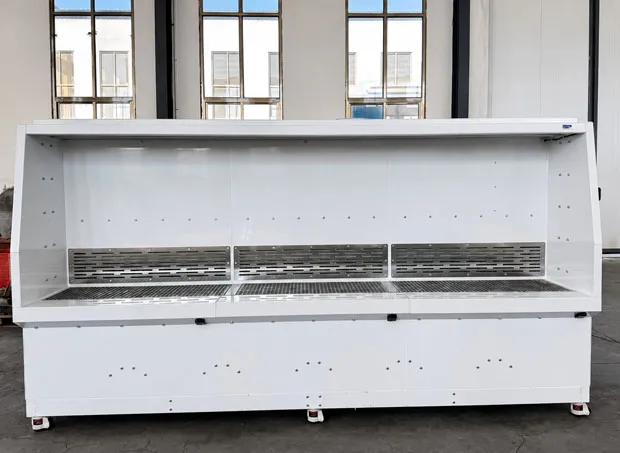
A portable dust collector can suit changing work positions, smaller operations, or jobs that need capture near an operator. Portable dust equipment reduces the need for long fixed branches, but it still requires correct pickup placement. Wheels alone do not make a unit suitable for continuous operation, difficult materials, or several simultaneous users.
A fixed installation is often worth assessing when extraction points remain in place and several machines run together. It can simplify shared discharge, monitoring, and maintenance. For growing plants, a modular layout may also help accommodate later changes. Plan those changes early: reserved space and connection points do not guarantee adequate future capacity.
Senserui’s website lists an S Series mobile grinding unit and a W Series compact unit for welding and grinding applications. It also lists an S Series centralized mainframe. Because these names overlap, request the full model and technical sheet when discussing workstation dust. Small shop dust collectors should likewise be evaluated against the actual industrial duty, not their appearance.
A sound design starts with a source list and a site layout. Identify each machine, its material, collection connection, operating schedule, and existing extraction needs. The engineer can then assess pickup requirements, branch routing, duct losses, and fan duty. Designing airflow systems requires both the required flow and the resistance along the working route.
Airflow must reach the active sources, not simply meet a headline catalog value. A long branch, restrictive fitting, or poorly placed hood can reduce capture. Changes in simultaneous use also affect network balance. Multi-fan operation may help match demand, but the control plan must preserve effective capture and material transport throughout the network.
Use a project-specific industrial dust collection system diagram to show connections, valves, controls, discharge, and service space. Label which items are supplied and which are installed locally. Engineered dust collection also requires practical access: technicians need room to inspect equipment, change consumables, and remove waste without disrupting the line unnecessarily.
Illustrative planning example—not a completed customer case: A plant has six extraction points, but only four normally operate together. The designer should review realistic combinations and the longest operating route. Sizing from a simple count of outlets may miss the controlling condition, while sizing every branch as continuously active may add unnecessary cost.
| Design input | What to provide | Why it matters |
| Material | Composition, test data, temperature, moisture | Equipment and media selection |
| Sources | Pickup locations and operating requirements | Capture arrangement |
| Schedule | Hours and simultaneous operation | Demand and controls |
| Layout | Distances, elevations, available space | Duct resistance and installation |
| Discharge | Waste quantity and removal method | Storage and continuity |
| Acceptance | Agreed measurement points and limits | Commissioning and verification |
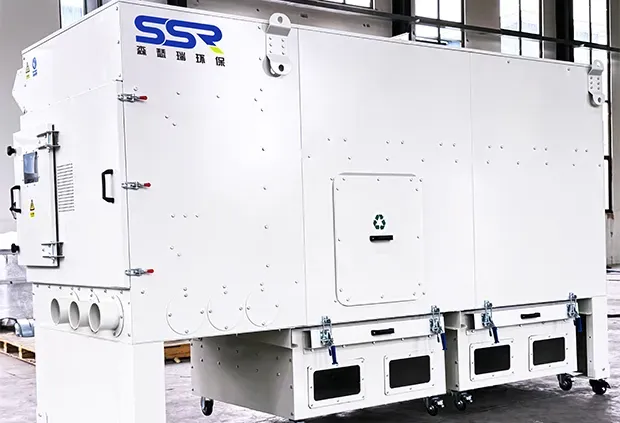
Some materials become hazardous when finely divided and dispersed. OSHA explains that combustible dust can become explosible under certain conditions, including materials that behave differently in larger pieces. A material name alone is therefore insufficient. Obtain suitable hazard information or testing and establish the protection needs for the complete installation.
Protection may involve ignition control, temperature detection, isolation, explosion relief, or suppression, depending on the assessment. These measures serve different purposes. A relief panel does not stop flame propagation through a connected duct, and a sensor does not replace a properly designed protection arrangement. The work environment, equipment location, and nearby occupied areas all matter.
Senserui describes monitoring and protective features across its range, including temperature sensing and pressure monitoring. Confirm what is supplied as standard, optional, or project-specific. For metal dust, address material compatibility and spark-producing activities. A safety feature list does not establish compliance in all industrial settings; request the documents relevant to your location and installation.
Compare suppliers by how clearly they explain suitability. Ask for a proposed configuration, fan duty information, media details, cleaning logic, and maintenance access. For industrial dust collection systems manufacturers, a documented design basis is more useful than a long list of industries. The proposal should explain what the equipment can handle and what remains to be confirmed.
An industrial vacuum typically collects settled dust and debris or serves small pickup connections at higher suction. A vacuum system and a process-extraction network have different duties. This matters when searches for vacuum dust collectors return mixed equipment types. The same care applies to a self contained dust collector: confirm the included fan, collection bin, and controls.
When browsing industrial dust collectors for sale, use an equal comparison sheet. Industrial dust collectors offer different capacities and configurations, so a photograph cannot establish equivalence. Senserui’s published CP and CZ tables span 30,000–150,000 m³/h, while the S mainframe table spans 3,000–15,000 m³/h. These are catalog values; the required operating point still needs confirmation.
| Supplier question | Evidence to request |
| Does the proposal match the process? | Written design assumptions |
| What is the stated performance based on? | Test conditions and supporting records |
| How will operation be maintained? | Cleaning and control description |
| What can the buyer service locally? | Manuals and spare-parts identification |
| How is support delivered? | Agreed remote and local responsibilities |
We manufacture industrial environmental equipment in China for customers planning new facilities and upgrading existing lines. Our published range includes modular mainframes, mobile and compact equipment, DC tower silos, MS integrated bins, and components. This allows buyers to discuss collection, storage, discharge, and maintenance together when planning industrial processes.
For industrial air projects involving solvents, our HAC range uses honeycomb activated carbon modules with monitoring options. Air filtration for solid particles and VOC adsorption serve different duties. We assess them as distinct treatment requirements. Your exhaust composition, concentration, temperature, moisture, and operating schedule help determine whether the proposed route needs further technical review.
Send us your layout and process details to request a configuration and quotation. Include the material, active pickup points, production hours, available space, discharge preference, and required acceptance criteria. For contractors, integrators, importers, and distributors, also identify installation responsibilities and documentation needs. These inputs help us discuss a practical dust collector system and a clear supply scope.
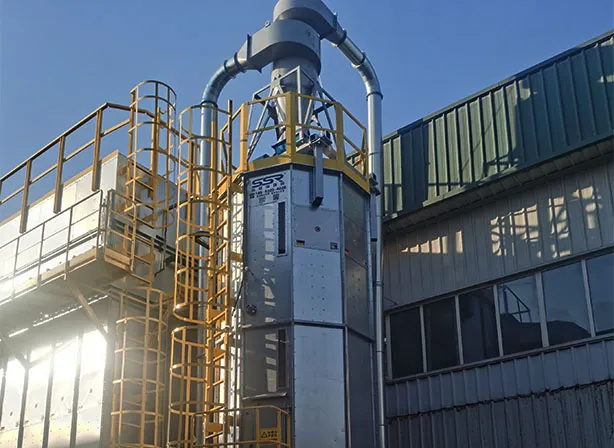
The best option fits your material, sources, schedule, site, and acceptance requirements. Compare capture performance, media suitability, maintenance access, safety provisions, and lifetime cost. There is no single configuration that suits every factory.
Sometimes separation alone fits a process objective, but suitability depends on particle characteristics and outlet requirements. Smaller suspended dust may require downstream treatment. Ask for performance across the relevant particle sizes before choosing a single-stage arrangement.
It may be, if its rated duty, capacity, cleaning method, and waste handling match the job. Verify the full operating conditions. For several fixed sources running together, compare a centralized arrangement as well.
Inspect the media, seals, duct joints, valves, fan, sensors, and discharge equipment. Follow the model-specific maintenance instructions. Changes in resistance, leakage, or capture can indicate service needs before visible emissions become obvious.