Для более быстрого ответа, пожалуйста, укажите свой WhatsApp или Skype в вашем сообщении, чтобы мы могли связаться с вами как можно скорее.
Чтобы помочь нам ответить быстрее, пожалуйста, оставьте свой WhatsApp, электронную почту или детали проекта. Мы обычно отвечаем в течение 24 часов. Для срочных запросов свяжитесь с нами через WhatsApp: +8617862411260 или WeChat: +8617862411260. Позвоните нам напрямую.
Dust never stays where it starts. It floats, settles, clogs machines, affects workers, and can even create fire or explosion risks. If your factory keeps cleaning the same dust every day, you do not just need more cleaning. You need the right dust control system.
Dust suppression is better when you can safely wet or bind the dust at the source, such as outdoor material handling. Dust collection is better for most indoor factories because a dust collection system captures dust, uses filtration to remove dust particles, and collects dust safely through a dust collector.
Dust suppression and dust collection both aim to control dust, but they work in different ways. Dust suppression tries to stop dust from becoming airborne. It often uses water mist, foam, chemical binders, or surface wetting to hold dust down. Dust collection captures dust after it is generated and removes dust from the air through a dust collector and filtration system.
In simple words: dust suppression controls dust at the material surface; dust collection removes dust from the air. That is the big difference. If you handle outdoor coal, sand, aggregate, or bulk powder, suppression can work well. If you run indoor cutting, grinding, welding, polishing, mixing, or packaging lines, a dust collection system is often the better long-term answer.
For medium- and large-scale factories, the best choice depends on dust type, process layout, dust loading, water sensitivity, safety risk, and local emission requirements. A good dust control plan should not start with “Which machine is cheaper?” It should start with “Where does the dust come from, and what happens after it is generated?”
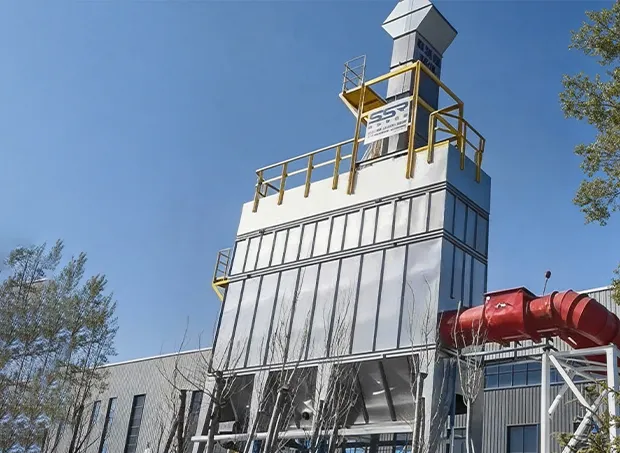
A dust collection system works by using airflow to capture dust near the source, move the dusty air through ducts, separate dust from the air, and store collected dust in a container. The heart of the system is the dust collector. The dust collector may use baghouse dust filtration, cartridge dust filtration, cyclone separation, or another filtration design.
A typical dust collection system includes:
Modern dust collection systems operate as engineered systems, not simple fans. The size of the dust collector, airflow, filter area, duct velocity, dust loading, and discharge method must fit the process. When a dust collection system is designed well, it can support cleaner air, better production stability, and safer industrial operations.
Dust suppression is often better when the dust is created outdoors or in a wet-tolerant process. If the dust generated comes from stockpiles, roads, crushers, conveyors, transfer points, or raw material handling, suppression can be simple and practical.
Dust suppression may be suitable for:
The key question is simple: Can the material safely get wet? If yes, dust suppression may reduce visible dust and help manage dust at the source. But if the product must stay dry, clean, or chemically stable, suppression may cause new problems.
For example, fine chemical powder, food powder, metal powder, battery material, wood dust, and coating dust may not tolerate water. In these cases, relying only on dust suppression can create quality issues or safety risks. That is where dust collection becomes stronger.
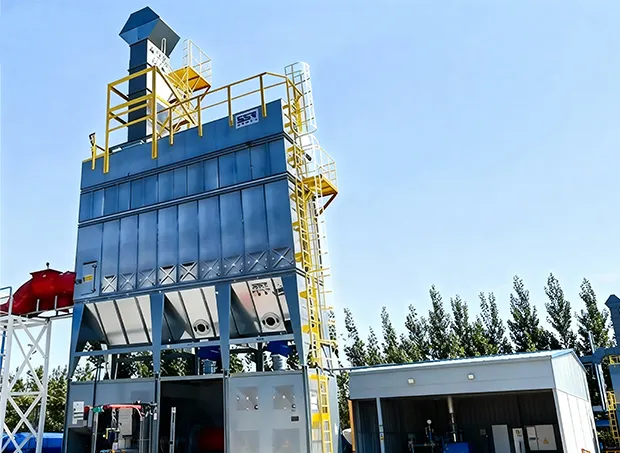
Industrial dust collection is usually better for indoor factories and controlled production lines. It captures airborne dust, uses filtration to remove dust from the air, and stores collected dust in a safer and more organized way.
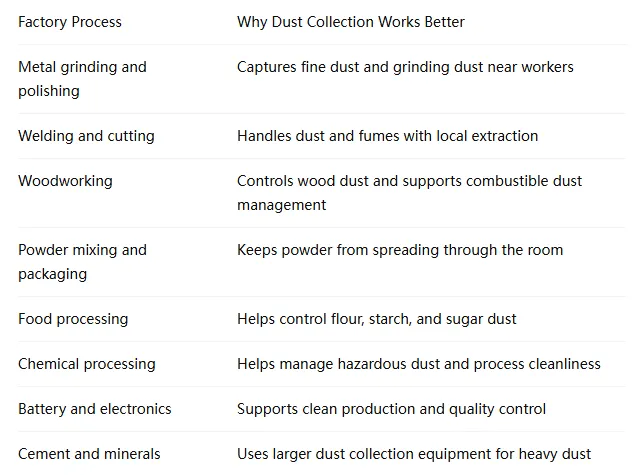
A dust collection system is often the better choice for:
A well-designed industrial dust collection system helps remove dust, reduce fugitive dust, protect workers, and improve factory appearance. It can also support compliance when the factory needs to reduce dust and particulate emissions.
For many Senserui China customers, dust collection is not only a safety investment. It is also a production investment. Cleaner workshops often mean less machine cleaning, fewer filter failures in downstream equipment, better product quality, and stronger customer confidence.
Combustible dust changes everything. If dust can burn or explode, the dust control system must include safety thinking from the start. Wood dust, aluminum dust, plastic dust, sugar dust, coal dust, and some chemical dust may create serious dust hazard conditions.
Combustible dust can become dangerous when fine dust becomes airborne, mixes with air, and meets an ignition source. Dust accumulation on beams, floors, ducts, and equipment can also become risky if it gets disturbed.
For combustible dust projects, dust collection systems may need:
A dust collector that handles combustible dust should never be selected only by price. The selection of dust control equipment must consider safety codes, dust testing, ignition risk, pressure relief, and equipment layout. This is one reason buyers prefer experienced industrial dust collection manufacturers instead of one-time equipment traders.
Yes. In some factories, the best solution is not dust suppression vs dust collection. It is dust suppression plus dust collection. Some systems are designed to prevent dust at one point and collect dust at another point.
For example, a bulk material plant may use dust suppression at outdoor stockpiles and dust extraction at indoor transfer stations. A cement plant may use water spray at raw material handling areas and a baghouse dust collector at packaging points. A woodworking plant may rely on dust collection systems to mitigate wood dust indoors while using cleaning procedures to manage settled dust.
Choosing a dust collection system should start with process information. A supplier needs to know what dust is produced, where it is produced, how much dust appears, whether the dust is dry or wet, and whether it is combustible.
Before requesting a quotation, prepare this checklist:
A proper dust collector should match the real operating condition. If the dust collector is too small, dust capture will be poor. If the dust collector is too large, energy cost may be too high. If the filter is wrong, the system may clog. If safety is ignored, combustible dust risk may remain.
This is why choosing a dust collection system should be an engineering decision, not only a purchasing decision.
Senserui China is a Chinese industrial environmental equipment manufacturer specializing in industrial dust collection and VOCs treatment solutions. We serve medium- and large-scale industrial manufacturers, environmental engineering contractors, system integrators, distributors, and importers in Europe, North America, the Middle East, Southeast Asia, and Latin America.
Our customers care about compliance, safety, energy efficiency, long-term operating cost, modular design, customization, and service. They do not only ask for a dust collector price. They ask whether the system can operate safely, meet local rules, reduce maintenance, and support future production growth.
Senserui China provides:
We understand that many buyers do not want a short-term trader. They want a stable manufacturing partner with engineering ability and long-term support. That is where Senserui China brings value.
Is the dust source outdoors?
↓
Yes → Can the material tolerate water?
↓
Yes → Dust suppression may work.
↓
No → Use enclosure and dust collection.
Is the dust source indoors?
↓
Yes → Is dust airborne near workers or machines?
↓
Yes → Use a dust collection system.
Is the dust combustible, fine, hazardous, or quality-sensitive?
↓
Yes → Use engineered dust collection with safety design.
This chart is simple, but it helps buyers avoid a common mistake. Do not choose a dust control method only because it is familiar. Choose the method that fits the process, dust hazard, and factory goal.
For many outdoor material handling areas, dust suppression can be practical. It can reduce visible dust and control dust at the surface. But for most indoor factories, dust collection is usually the better choice because it captures airborne dust, uses filtration, and stores collected dust in a safer way.
If your factory handles fine dust, hazardous dust, combustible dust, grinding dust, wood dust, plastic dust, or powder materials, a dust collection system is usually more reliable than suppression alone. If your plant has both outdoor and indoor dust sources, a hybrid solution may be best.
The final decision should consider dust type, process layout, safety risk, water sensitivity, emission target, energy cost, and long-term maintenance. Senserui China can help evaluate these factors and design a practical industrial dust collection and VOCs treatment solution for your project.
Dust suppression is better for outdoor or wet-tolerant dust sources, such as stockpiles, roads, and raw material handling. Dust collection is better for indoor factories, fine dust, dry processes, hazardous dust, and production areas that need stable air quality.
A factory should use a dust collector when dust becomes airborne near workers, machines, products, or electrical systems. A dust collector is also important when the process creates fine dust, combustible dust, dust and fumes, or dust that must be captured for compliance.
A dust collector is the main machine that separates dust from air. A dust collection system includes the dust collector plus hoods, ducts, fan, filter, cleaning system, control panel, safety devices, and collected dust discharge equipment.
A cartridge dust collector is often a good choice for fine dust because cartridge filters provide large filtration area in a compact design. However, the final choice depends on dust type, temperature, moisture, dust loading, and safety risk.
Yes. Combustible dust can create fire or explosion risks when fine dust becomes airborne and meets an ignition source. Wood dust, sugar dust, plastic dust, metal dust, coal dust, and some chemical dust may require special safety design.
Yes. Many factories need both сбор пыли and VOCs treatment. In many systems, dust must be removed before VOCs treatment equipment to protect activated carbon, catalytic oxidation systems, RTO units, or other exhaust gas treatment equipment.