Для более быстрого ответа, пожалуйста, укажите свой WhatsApp или Skype в вашем сообщении, чтобы мы могли связаться с вами как можно скорее.
Чтобы помочь нам ответить быстрее, пожалуйста, оставьте свой WhatsApp, электронную почту или детали проекта. Мы обычно отвечаем в течение 24 часов. Для срочных запросов свяжитесь с нами через WhatsApp: +8617862411260 или WeChat: +8617862411260. Позвоните нам напрямую.
Dust does not only make a workshop dirty. It can affect machines, products, workers, and production rhythm. If every station needs manual cleaning, your factory is losing time. A centralized dust removal integration plan helps turn scattered dust problems into one controlled system.
Centralized dust removal integration connects dust sources from multiple machines into a planned dust collection system. It uses hoods, ducts, filters, fans, a dust collector, a cleaning system, and control logic to capture dust, improve air quality, protect equipment, and support stable automated production.
Centralized dust removal integration means designing one planned dust collection system to serve several dust sources in a factory. Instead of placing a small dust collector beside every machine, the factory connects dust-producing points to a central dust collector through ductwork, hoods, dampers, and control systems.
This method is common in industrial environments where many machines produce dust at the same time. The system may serve cutting stations, grinding machines, punching lines, polishing areas, welding stations, material handling points, and other process dust sources. The goal is to capture dust before it spreads.
For automated factories, centralized dust integration is not only a cleaning issue. It is part of production line planning. A good dust collection layout keeps the work area cleaner, protects sensors and electrical cabinets, reduces dust accumulation, and improves long-term equipment stability.
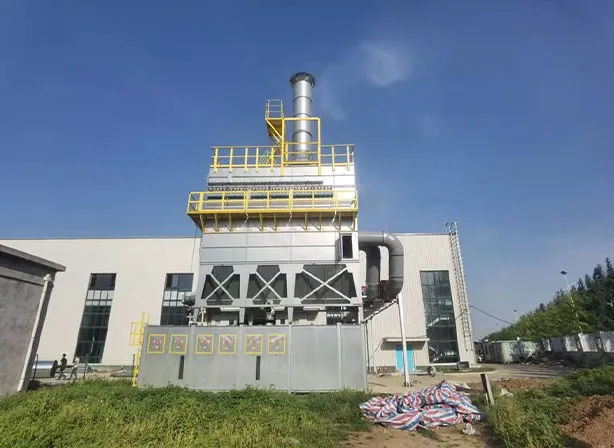
Automated production depends on stable machines. Dust can disturb that stability. Fine dust may settle on sensors, guide rails, motors, electrical panels, pneumatic parts, and finished products. Grinding dust, aluminum dust, and dry dust can also create safety or quality concerns if they are not controlled.
In metal profile processing, dust generation may come from cutting, punching, drilling, grinding, deburring, welding, or surface preparation. If dust particles float into the work environment, workers must clean more often. If dust enters machine parts, maintenance becomes harder. Small dust problems become large production problems.
This is why dust collection should be planned early. When a new automated production line is designed, the dust source, air path, dust collector size, filter type, duct route, and maintenance access should be reviewed together. Dust control becomes easier when it is built into the line layout from the start.
A centralized dust collection system works by using airflow to capture dust at different production points and move it to one central dust collector. The dust collector then separates dust from the air through filtration, cyclone separation, cartridge filter media, filter bags, or combined methods.
The basic process is simple:
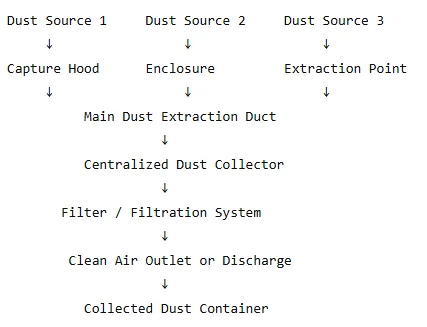
A well-designed system keeps airflow balanced. Each branch duct should have enough suction. If one branch takes too much air, another branch may lose dust capture. This is why system design matters as much as the dust collector machine itself.
A система пылеулавливателя includes more than the main dust collector. It is a complete engineering setup. Each part must match the dust type, dust loading, air volume, production line layout, and maintenance plan.
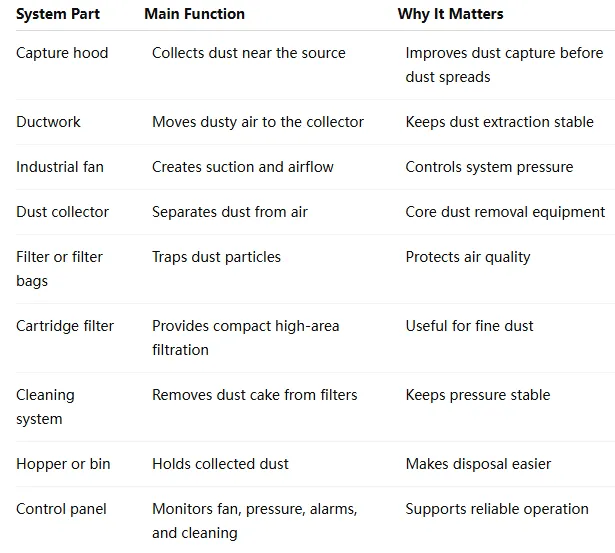
The filter is especially important. A wrong filter may clog quickly. A small filter area can create high pressure drop. Poor filter media may allow dust emissions. Good dust collector filters support stable air filtration and longer service life.
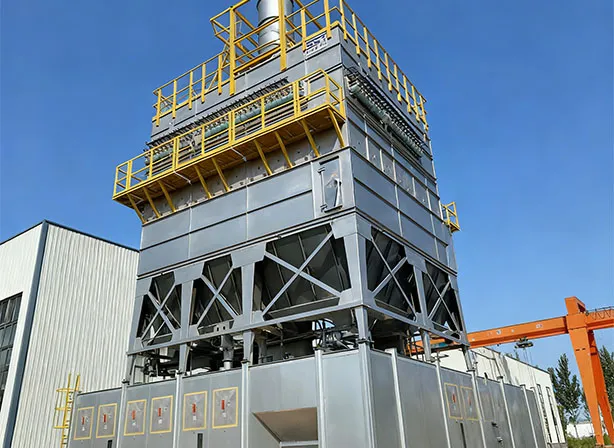
The right industrial dust collector depends on dust characteristics. Different dust needs different collector systems. Wood dust is not the same as metal dust. Fine dust is not the same as heavy dust. Combustible dust needs more safety review than normal process dust.
Common options include:
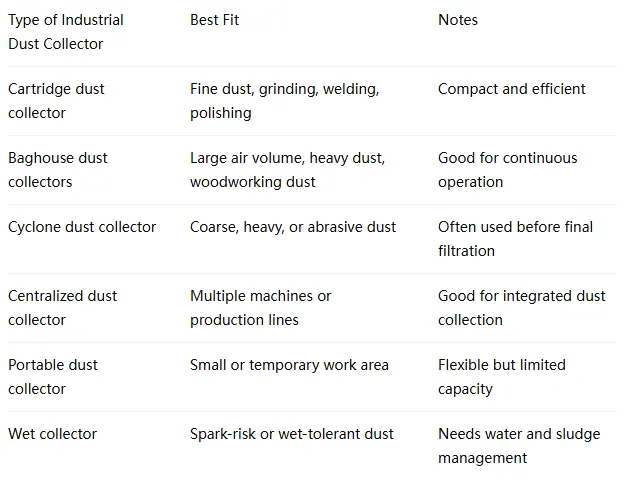
For a large production line, a centralized dust collector can reduce scattered equipment and simplify maintenance. However, a local dust collector may still be useful for a special process, a temporary station, or a small isolated dust source.
The best choice is often not one product. It is a balanced dust collection solution.
A dust collector can use different filtration and separation methods. Each method has strengths.
A cartridge dust collector uses pleated cartridge filter elements. The pleated design gives a large filter area in a compact space. It is often used for fine dust, welding fumes, grinding dust, and metalworking dust.
A baghouse uses long filter bags. Baghouse systems are suitable for larger air volume, heavier dust loading, and continuous production. They are widely used in woodworking, minerals, cement, building materials, and some material handling applications.
A cyclone uses spinning airflow to separate heavier dust particles before the air reaches the final filter. Cyclone separation can protect the main filter from heavy or abrasive dust.
A smart system may use a cyclone before a cartridge or baghouse unit. This can reduce dust loading and improve filter life. In other cases, direct filtration is enough. The system should fit the dust, not the other way around.
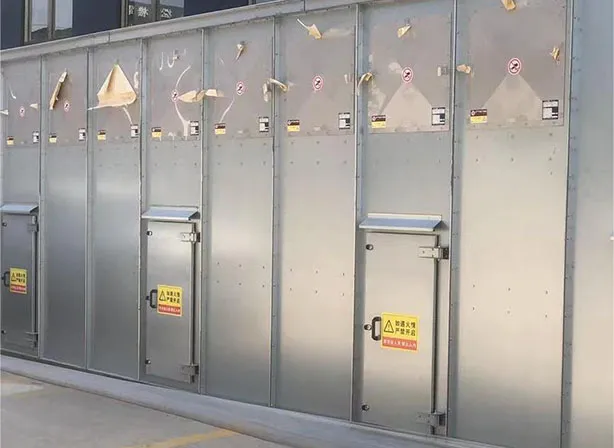
Weifang Chenlong Intelligent Technology Co., Ltd. specializes in high-precision cold bending forming equipment and customized automated production lines. Its customers include manufacturers, distributors, and OEM partners in electrical equipment, new energy, and structural equipment industries.
In these production lines, dust may appear during cutting, punching, trimming, welding, grinding, and deburring. Centralized dust removal integration helps keep the line cleaner and easier to maintain. It can protect profile accuracy by reducing dust around sensors, positioning systems, guide devices, and electrical controls.
For metal profile processing, dust collection planning may include:
Chenlong does not need to be positioned as a dust collector manufacturer. Its strength is automated production line design. In a complete factory project, Chenlong can help buyers consider where dust collection equipment should connect with the line, how the duct route affects layout, and how dust control supports long-term production efficiency.
Dust is not only a cleaning problem. It can become a dust hazard. Some dust affects indoor air quality. Some dust damages machines. Some dust is hazardous dust because of its chemical nature. Some dust becomes explosive dust when suspended in air and exposed to an ignition source.
Combustible dust deserves special attention. Wood dust, aluminum dust, sugar dust, plastic dust, and some chemical dust may create fire or explosion risk under certain conditions. A centralized dust collection system handling combustible dust may need explosion venting, spark detection, isolation valves, anti-static filter media, grounding, and safe collected dust discharge.
Key risk questions include:
The answers affect the type of dust collector, duct speed, filter media, cleaning system, and safety protection.
Material handling often creates dust. When materials move, dust moves too. Conveyors, hoppers, feeders, transfer points, cutting sections, and packaging stations may all release dust.
A good dust extraction plan should follow the material path. It should identify where dust starts and where it may escape. For example, if material drops from one conveyor to another, a hood or enclosure may be needed. If powder is loaded into a bin, a dust collector or vent filter may be needed. If metal profiles are cut, local dust capture may be needed at the cutting point.
In automated production, material handling and dust collection should not fight each other. Ducts should not block maintenance access. Hoods should not interfere with loading. A dust collector should not force workers to take long cleaning routes. Good integration makes production smoother, not more complicated.
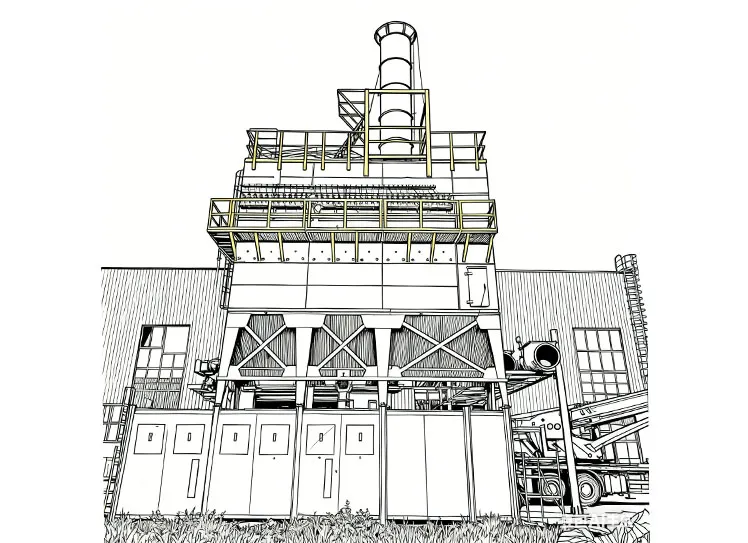
Chenlong is a high-tech company based in Shandong, China. It focuses on high-precision cold bending forming equipment and customized automated production lines. Chenlong serves global manufacturers, distributors, and OEM partners that need efficient metal profile processing, electrical equipment production, new energy equipment production, and structural equipment solutions.
For buyers planning dust removal integration around an automated line, Chenlong can support from the production side:
Chenlong’s value is not selling a random dust collector. The value is helping the buyer build a smarter production line where dust control, automation, material flow, and quality control are considered together.
Before asking for a quotation or layout proposal, prepare clear project details.
Recommended checklist:
This checklist helps the engineering team design a centralized dust collection system that fits the real factory, not just a catalog model.
Centralized dust removal integration means connecting multiple dust sources in a factory to one planned dust collection system. It uses hoods, ducts, filters, a dust collector, fan, and control system to capture dust and improve the work environment.
A centralized dust collector is often better for larger factories with many dust sources because it simplifies maintenance, improves layout, and supports integrated control. Small dust collectors may still be useful for isolated or temporary workstations.
For many metal processing lines, a cartridge dust collector works well for fine dust and grinding dust. For heavy dust loading, a baghouse or cyclone plus filter system may be better. The final choice depends on dust type, airflow, and safety risk.
The filter decides how well the system captures dust particles. Wrong filter media can clog quickly, release dust, or increase pressure drop. The filter should match dust size, moisture, temperature, and dust loading.
Yes. Good dust collection can reduce cleaning time, protect machines, and improve production stability. It also helps maintenance teams manage filters, ducts, and collected dust in a more organized way.
Yes. Early planning is better. It helps reserve space for ducts, hoods, filter access, collector location, and maintenance routes. Adding dust collection after installation often costs more and may create layout problems.