Para uma resposta mais rápida, inclua seu WhatsApp ou Skype na sua mensagem para que possamos entrar em contato o mais rápido possível.
Para nos ajudar a responder mais rapidamente, por favor, deixe seu WhatsApp, e-mail ou detalhes do projeto. Geralmente respondemos dentro de 24 horas. Para consultas urgentes, entre em contato conosco pelo WhatsApp: +8617862411260 ou WeChat: +8617862411260. ligue-nos diretamente.
A manufacturer’s homepage tells you what they want you to see. What actually predicts whether a system performs after installation is production evidence, tested capability, and documentation you can verify — not search ranking or catalog size. This checklist covers ten things worth confirming before you shortlist anyone.
A sales page can describe capability in a sentence. A production base either exists at a checkable scale or it doesn’t. Senserui, for example, operates from roughly a 10,000 m² production facility in Qingdao running 20+ operational lines, including CNC laser cutting and hydraulic press-brake processing. That’s not a claim you take on faith — it’s a physical footprint a buyer can ask to see photos or documentation of, and a manufacturer that can’t produce that evidence when asked is telling you something.
Compared with a listing on a B2B directory aggregator, where any registered account can claim “manufacturer” status regardless of what they actually own, a real production base is the first filter that separates a factory from a trading company reselling someone else’s equipment under its own label.
Ask specifically what happens between assembly and shipment. In-house testing capability — airflow verification, noise measurement, filter performance checks — catches problems before they reach your site instead of after. A manufacturer that runs full-process quality inspection and functional testing prior to delivery can usually describe that process in specific steps; one that can’t is likely outsourcing final QC to your commissioning team, whether they say so or not.
This matters more than it sounds. A dust collector that passes a paper spec sheet but was never airflow-tested at the factory can still arrive undersized for your actual duct run — a gap that only shows up once it’s already bolted to your floor.
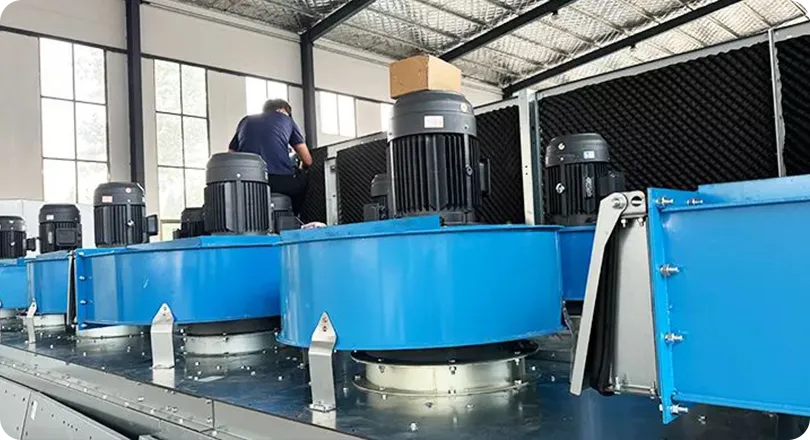
For combustible-dust applications — wood, metal, fine powders — this distinction isn’t academic. NFPA 660, the National Fire Protection Association’s consolidated standard for combustible dusts and particulate solids, is the reference point most facilities use to determine what protection a given process actually requires. A manufacturer worth shortlisting should be able to point to which safety features (spark detection, explosion relief, chain-break detection) map to which parts of that standard, rather than listing “safety features” as a bullet point with no connection to your specific hazard class.
Whether a manufacturer offers OEM/ODM services is a useful proxy question, even if you don’t need custom branding. Taking on OEM work means engineering teams, tooling and quality processes flexible enough to handle configurations outside a standard catalog — which is exactly the capability you’re relying on if your plant layout doesn’t match a textbook install. A manufacturer that only offers fixed configurations off a price list is telling you, indirectly, how much engineering flexibility to expect.
Published after-sales response commitments are common; verifying them before you buy is not. If a manufacturer states a response time — Senserui’s stated commitment is within 24 hours — email their support channel with a real technical question before you’re a customer and time how long the reply actually takes. You’ll learn more from that one test than from any page of marketing copy.
Patent counts get thrown around loosely in this industry, and a number alone (Senserui’s site states 10+ patents/patented technologies) doesn’t tell you much about product quality on its own. What it does tell you is whether a manufacturer is investing in engineering differentiation versus assembling components other people designed. Ask what the patents actually cover — filtration method, safety system, modular structure — rather than accepting the count as a standalone credential.
“Global service network” is a phrase every manufacturer’s website uses. The useful follow-up question is where, specifically: which countries have local service staff versus which are covered by remote troubleshooting and spare-parts shipping only. A company that states a global network without disclosing service center locations, as several manufacturers in this space do, isn’t necessarily misleading you — but if your plant is overseas from the factory, get the specifics in writing before you assume on-site support is available.
Watch how a manufacturer handles your first pricing inquiry. One that asks for your airflow requirements, duct layout, dust characteristics and safety classification before quoting is pricing your actual system. One that sends a number back within the hour, before asking anything about your process, is quoting a generic template — and that number will very likely change once real engineering starts. Price: available on request based on system configuration and project requirements is the honest version of that answer; a same-day flat quote with no questions asked is worth treating with more skepticism than reassurance.
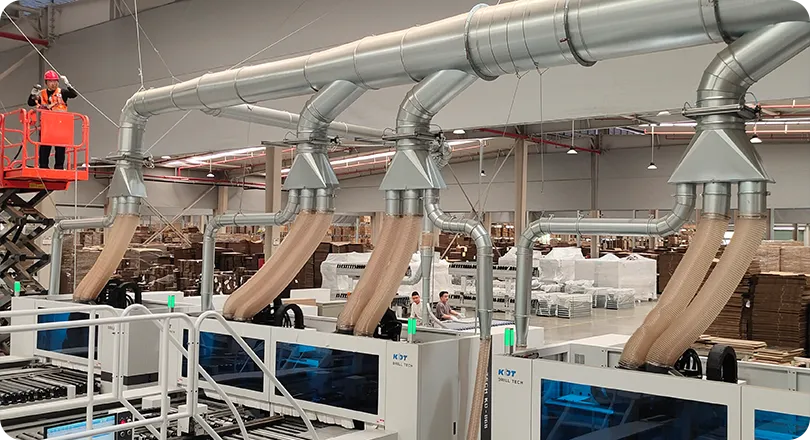
Before committing, request in writing: the certificate numbers behind any compliance claims, the specific test data behind any performance figures (emission target, noise level, airflow), and the after-sales terms in contract language rather than marketing language. A manufacturer confident in its own documentation will produce this without friction. One that stalls on paperwork after weeks of responsive sales conversation is showing you a preview of what post-sale support will look like.
A: It’s a meaningful baseline, but check the edition and the certificate number. ISO has released ISO/FDIS 9001, with the new edition expected to replace ISO 9001:2015 in September 2026 — worth confirming which edition a manufacturer’s current certificate actually covers, since a stale reference on a website doesn’t always get updated the moment a standard changes.
A: No — published flat prices for industrial dust collectors are usually a sign of a simplified, non-configured product line, not necessarily a red flag but also not a substitute for a system priced to your actual airflow and layout. Configuration-dependent quoting is standard practice across this category.
A: It matters less for the single unit and more for what happens if something goes wrong. A manufacturer with in-house CNC fabrication and modular pre-assembly can typically produce replacement parts or modified components faster than one relying on third-party subcontractors for the same work.
A: There’s no single industry-wide standard, so compare stated commitments directly — Senserui states within 24 hours as its published response commitment — and verify with a real pre-sale inquiry rather than taking the number at face value.
A: Not on their own. Patent counts vary widely in what they actually cover, from core filtration technology to minor structural details. Ask what the patents protect before treating the number as a differentiator.