For a faster response, please include your WhatsApp or Skype in your message so we can contact you as soon as possible.
To help us respond faster, please leave your WhatsApp, email, or project details. We usually reply within 24 hours. For urgent inquiries,contact us on WhatsApp: +8617862411260 or WeChat: +8617862411260. call us directly.
Dust from woodworking, grinding, cutting, and fabrication can quickly affect air quality, machine performance, and worker comfort. Many workshops still depend on simple vacuum systems that cannot handle continuous dust generation.
The W Series Compact Dust Collector provides a mobile and efficient dust collection solution for factories, workshops, and professional woodworking environments. With powerful suction, polyester filtration, flexible mobility, and compact design, it captures dust directly from the source and helps create a cleaner workplace.
The W Series Compact Dust Collector is a mobile dust collector designed for flexible dust removal in workshops and industrial environments. It provides localized dust capture for woodworking, grinding, polishing, cutting, and fabrication applications.
Unlike large fixed dust collection systems, a compact dust collector can move between workstations. This makes it useful for factories where machines change positions or where operators need quick dust removal without complex installation.
A complete portable dust collection solution usually includes:
| Component | Function |
| Suction Inlet | Captures dust near the source |
| Dust Hose | Transfers contaminated air |
| Filter System | Removes dust particles |
| Fan Motor | Generates suction airflow |
| Collection Bag | Stores collected dust |
| Mobile Base | Allows easy movement |
Senserui China designs dust collection equipment for industrial customers who need reliable filtration, simple maintenance, and flexible installation.
Dust is generated in almost every production process. Woodworking shops create saw dust and fine wood particles. Metal workshops create grinding dust and welding fume. Plastic processing creates lightweight particles that can remain airborne.
A mobile dust collector helps control these problems by capturing dust before it spreads.
Common applications include:
For smaller workshops, a portable dust collector provides an economical solution. Instead of installing a complete factory-wide dust collection system, operators can move the machine where dust is produced.
This improves:
A cleaner workshop is not only more comfortable. It also helps protect expensive machinery and finished products.
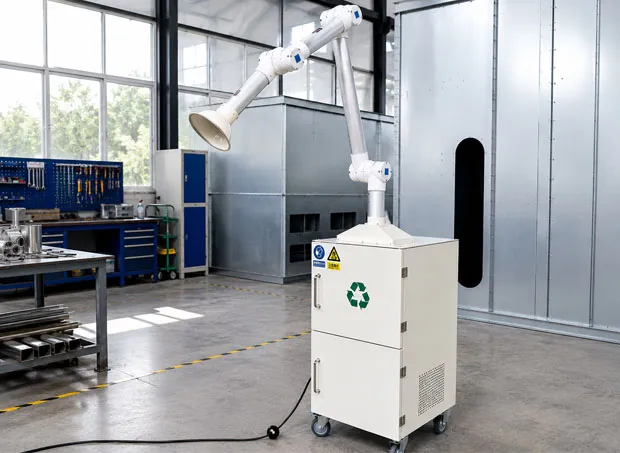
A portable dust collector works through a simple process:
Dust Source
↓
Dust Hood / Hose Connection
↓
Fan Suction
↓
Filter System
↓
Clean Air
↓
Collection Bag
The suction system captures dust directly from the machine. The contaminated air passes through the filter, where dust particles are separated from the airflow.
Compared with manual cleaning, this approach removes dust continuously during operation.
A good dust collection system should capture dust:
Senserui focuses on source capture because removing dust after it spreads requires more energy and creates more maintenance work.
Woodworking is one of the most common applications for compact dust collectors. Processes such as cutting, sanding, drilling, and routing create large amounts of saw dust.
A woodworking dust collector must handle different particle sizes. Large chips require strong airflow, while fine dust requires better filtration.
The W Series can support:
For woodworking shops, important selection factors include:
| Factor | Why It Matters |
| Airflow (CFM) | Determines the system’s suction capacity |
| Hose Diameter | Affects airflow and pressure loss |
| Filter Efficiency | Controls the capture of fine dust particles |
| Collection Bag Size | Reduces the frequency of emptying |
| Mobility | Improves operational flexibility |
Some small woodworking products in the market use names such as wen dust collector or wen dc3401 for consumer workshop searches. However, industrial users usually require stronger dust collection systems with better filtration, durability, and customization.
Senserui focuses on industrial-grade solutions rather than only hobby-level equipment.
A dust collector with polyester filter uses polyester filter media to capture dust particles from contaminated air.
The filter is important because different dust types require different filtration performance.
A dry dust collector with polyester filter is commonly used for:
The filtration process:
A dust collector with polyester filter provides advantages such as:
For fine dust filtration, the correct filter selection is essential. A 5-micron filtration level is often discussed in woodworking applications because small particles can remain suspended in workshop air.
A high-quality filter improves dust collection performance and reduces the amount of dust released back into the workspace.
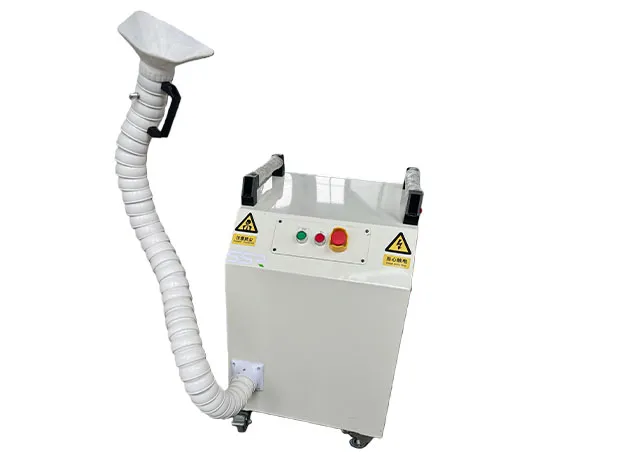
Factories normally choose between mobile equipment and fixed systems.
| Feature | Mobile Dust Collector | Stationary Dust Collection System |
| Installation | Quick and easy | Requires an engineered system layout |
| Movement | Easy to move between work areas | Installed in a fixed location |
| Application | Individual machines or workstations | Multiple machines or production lines |
| Cost | Lower initial investment | Higher initial investment |
| Expansion | Limited | Excellent scalability |
A mobile dust collector is ideal when:
A stationary dust collection system is better for:
Senserui can help customers select the correct dust collection method according to production requirements.
CFM is one of the most important specifications when choosing a dust collector. It represents airflow capacity.
A higher CFM value does not always mean better performance. The system must match the machine, hose size, dust type, and filter resistance.
Important factors include:
Airflow
Strong airflow helps capture dust effectively.
Hose Diameter
A suitable dust collection hose prevents airflow loss.
Filter Area
A larger filter surface improves filtration efficiency.
Dust Type
Fine dust, heavy dust, and sticky dust require different designs.
For example:
A professional dust collection system balances suction power and filtration efficiency.
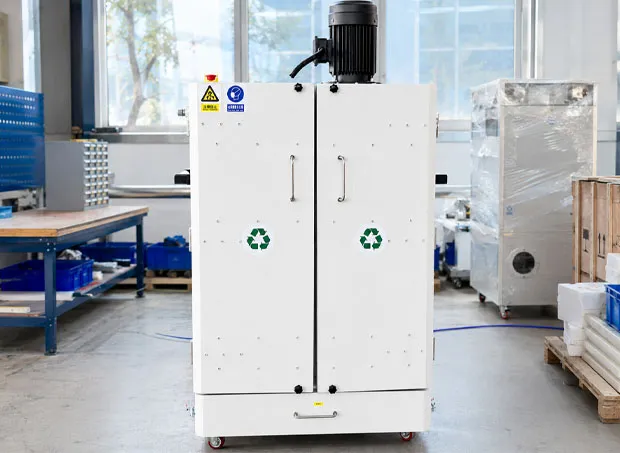
Many small workshop dust collectors focus on basic dust removal. Industrial applications require more.
A professional industrial dust collector should provide:
Compared with small consumer products, industrial systems provide better adaptability for factories.
The W Series Compact Dust Collector focuses on:
Compact Design
The machine saves installation space.
Mobility
The mobile base allows movement between workstations.
Efficient Filtration
The filter system captures dust during production.
Flexible Application
It supports woodworking, grinding, polishing, and fabrication.
Whether customers search for a 12-gallon dry dust collector, 660 cfm rolling dust collector, or larger industrial solutions, the final selection should always depend on actual production requirements.
Senserui China is a professional manufacturer specializing in industrial dust collection and VOCs treatment systems.
We provide:
Our engineering team evaluates:
For woodworking, metalworking, and manufacturing customers, we focus on practical solutions instead of standard products only.
A complete dust collection solution may include:
This engineering approach helps international customers achieve cleaner production and more stable operation.
A mobile dust collector is a movable filtration machine designed to capture dust from individual machines or workstations. It is widely used for woodworking, grinding, polishing, and fabrication.
Yes. A portable dust collector is commonly used in woodworking shops for saw dust, sanding dust, and machine-generated particles.
CFM means cubic feet per minute. It measures airflow capacity and helps determine whether a dust collector can provide enough suction.
A dust collector with polyester filter uses polyester filtration media to capture dust particles from industrial airflow. It provides durability and stable filtration performance.
For small workshops, yes. For large factories with many machines, a centralized dust collection system is usually more suitable.
Yes. Senserui provides customized dust collection solutions based on dust type, airflow, workshop layout, and customer requirements.