Per una risposta più rapida, ti preghiamo di includere il tuo WhatsApp o Skype nel tuo messaggio in modo che possiamo contattarti il prima possibile.
Per aiutarci a rispondere più velocemente, ti preghiamo di lasciare il tuo WhatsApp, email o dettagli del progetto. Di solito rispondiamo entro 24 ore. Per richieste urgenti, contattaci su WhatsApp: +8617862411260 o WeChat: +8617862411260. chiamaci direttamente.
Grinding, polishing, and metal finishing processes generate dust particles, sparks, and fine airborne contaminants that can quickly spread across a workshop. Without proper extraction, workers face higher exposure risks, equipment becomes harder to maintain, and indoor air quality can decline.
A dust collection downdraft table provides a workstation-level dust extraction solution by pulling dust downward through a perforated or slotted work surface into a filtration unit. It is designed for localized grinding dust collection, polishing operations, and metalworking applications where dust needs to be captured directly at the source.
However, a downdraft table is not a replacement for every industrial dust collection system. Understanding its working range, filtration design, and application limits helps factories choose the right dust collection solution.
A dust collection downdraft table is a specialized workstation designed to capture dust and particulate generated during grinding, sanding, polishing, and fabrication processes.
Unlike traditional dust extraction systems that capture dust through a side arm or overhead hood, a downdraft table uses downward airflow.
The basic working principle is:
Dust Generation
↓
Perforated Work Surface
↓
Downward Airflow
↓
Filter System
↓
Clean Air Outlet
The fan creates suction below the working surface. When operators grind or polish parts on the table, dust particles are pulled downward before they can spread into the surrounding workspace.
The main purpose is source capture.
A downdraft table captures dust:
This makes it suitable for:
Senserui China develops industrial dust collection equipment for manufacturers that require cleaner production environments, stable operation, and customized dust control solutions.
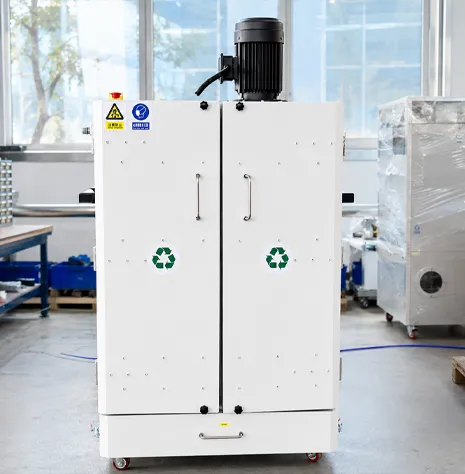
The working principle of a downdraft table is simple, but the engineering behind effective dust collection is more complex.
The table surface contains openings that allow contaminated air to move downward.
During operation:
The effectiveness depends on several factors:
| Factor | Impact on Performance |
| Airflow volume | Determines capture ability |
| Table surface design | Controls airflow distribution |
| Filter efficiency | Determines dust removal performance |
| Dust characteristics | Influences filter selection |
| Workpiece position | Affects capture distance |
A common misunderstanding is that a downdraft table can remove all dust from an entire workshop.
It cannot.
A downdraft table is designed for localized dust collection, not complete factory-wide air cleaning.
If dust moves beyond the capture area, the airflow may no longer overcome the particle momentum.
Every dust collection downdraft table has a limited capture zone.
The system works best when dust is generated:
However, dust may escape when:
For example:
A grinder producing sparks at the edge of a large component may throw particles beyond the downward airflow area.
In this situation, the downdraft table cannot capture material that never enters its airflow path.
This is why factories must match equipment selection with the actual production process.
A downdraft table is ideal for:
✅ Fixed grinding stations
✅ Small and medium parts
✅ Polishing operations
✅ Controlled workstation environments
A different industrial dust collection system may be required for:
❌ Large-area grinding
❌ Moving production processes
❌ Multiple distant workstations
❌ Whole-shop dust control
For these applications, companies may need:
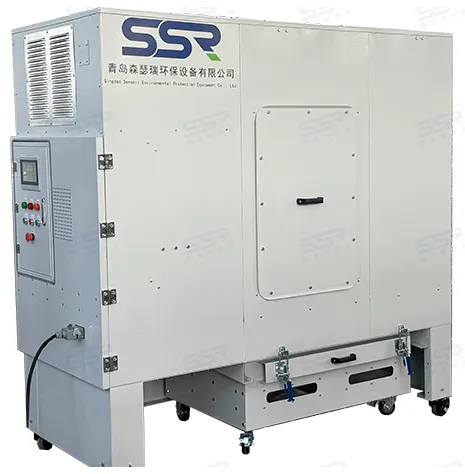
Grinding and sanding may look similar, but the dust characteristics are different.
Sanding usually creates fine dry particles.
Grinding can create:
This difference directly affects dust collector design.
A standard dust collection table may work for sanding applications, but grinding requires additional safety consideration.
During metal grinding, sparks can enter the filtration area.
If hot particles reach accumulated dust inside a filter system, they may create safety risks.
A grinding dust collection table should consider:
Senserui’s PW Series Grinding Dust Collection Table is designed specifically around grinding applications.
It integrates:
Compared with general-purpose downdraft tables, the PW Series focuses on the challenges of grinding environments.
For sanding-only applications, spark protection may not be the main selection factor. However, for metal grinding workshops, it becomes an important consideration.
The PW Series Grinding Dust Collection Table is designed for factories that need localized metal grinding dust collection, polishing dust extraction, and workstation-level dust control.
Unlike a general workshop table, the PW Series combines the working surface, dust capture structure, and filtration unit into one integrated solution.
The main configuration features include:
| Attribute | PW Series Grinding Dust Collection Table |
| Equipment Type | Integrated dust collection downdraft table |
| Main Application | Grinding, polishing, metal finishing |
| Capture Method | Downward airflow through work surface |
| Filter Elements | Replaceable filter elements |
| Spark Protection | Integrated fire-arresting structure |
| Installation | Individual grinding/polishing workstation |
| Layout | Multiple units can be arranged side-by-side |
| Structure | Compact workstation design |
| Power / Airflow | Not publicly disclosed in current documentation |
| Price | Available according to configuration and project requirements |
The PW Series focuses on the practical needs of industrial users:
For factories requiring exact airflow calculation, dust loading analysis, or integration with a larger industrial dust collection system, Senserui engineers evaluate the application conditions before final equipment selection.
This prevents a common mistake: choosing equipment based only on table size while ignoring actual dust generation.
Some factories operate several grinding or polishing stations at the same time.
In this situation, installing multiple dust collection tables can provide a flexible workstation-based dust collection solution.
For example:
A metal fabrication workshop may have:
Instead of building a complicated duct network, the factory can install individual downdraft tables at each working position.
This approach provides several advantages:
Each dust collection table operates with its own filter system.
If one unit reaches its filter capacity, other workstations can continue operating normally.
This differs from a shared centralized dust collection system where one blocked branch or filter problem may affect the entire production line.
Industrial production layouts often change.
A mobile or modular dust collection solution allows factories to:
This flexibility is valuable for:
With individual units:
However, multiple units also mean more individual filters require inspection and replacement.
The best choice depends on:
A downdraft table and an collettore di polvere industriale solve similar problems, but they are designed for different working conditions.
The key difference is the capture method.
A dust collection downdraft table captures dust downward through a fixed working surface.
A traditional industrial dust collector usually captures dust through:
The comparison:
| Caratteristica | Downdraft Table | Industrial Dust Collector |
| Capture Direction | Downward | Point extraction / duct extraction |
| Best Application | Fixed workstation | Multiple applications |
| Mobility | High for compact models | Depends on design |
| Grinding Application | Excellent for bench work | Better for tools and machines |
| Large Area Control | Limited | Better |
| Multiple Machines | Requires multiple units | Can support multiple points |
A downdraft table is the right choice when:
Un collettore di polvere industriale is better when:
Senserui provides different industrial dust collection solutions based on application requirements rather than selling one equipment type for every situation.
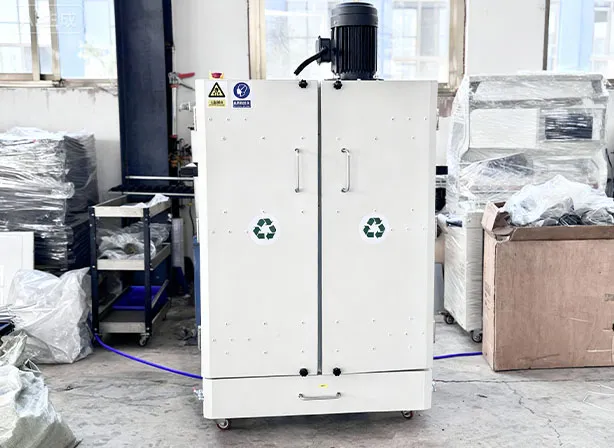
A downdraft table solves a workstation problem.
Una centralized dust collection system solves a factory-wide dust management problem.
Large manufacturing facilities often require centralized systems when they have:
A centralized industrial dust collection system normally includes:
Applications include:
For example:
A factory with 20 grinding machines running multiple shifts may not benefit from installing 20 separate tables.
A properly designed centralized dust collection system can provide:
However, centralized systems require careful engineering.
Important design factors include:
Poor design can cause:
This is why professional industrial dust collection system design is important before installation.
The selection depends mainly on how the dust is generated.
Use a downdraft table when:
✅ Parts stay on a fixed working surface
✅ Grinding or polishing happens on a bench
✅ Operators need downward capture
✅ Production requires flexible workstation solutions
Choose a grinding dust collector when:
✅ The tool creates dust away from a fixed surface
✅ Operators move around large parts
✅ Extraction needs to follow the tool position
✅ Welding and grinding processes are combined
A simple decision guide:
| Production Situation | Recommended Solution |
| Small grinding bench | PW Series Downdraft Table |
| Mobile welding station | Mobile dust collector |
| Large grinding line | Central dust collection system |
| Polishing workstation | Dust collection table |
| Multiple CNC machines | Industrial dust extraction system |
The correct solution depends on the actual production process.
Senserui China is an industrial environmental equipment manufacturer specializing in:
Our customers include:
We understand that industrial customers do not only need a machine.
They need a complete solution that considers:
Senserui supports customers with:
Application Analysis
We evaluate:
Equipment Selection
We recommend suitable solutions, including:
Engineering Support
Our team assists with:
For international factories looking for a reliable industrial dust collector manufacturer, Senserui provides customized dust collection solutions designed for real production environments.
Can a downdraft table replace a centralized dust collection system?
No. A downdraft table is designed for localized dust capture at a workstation. It cannot replace a complete centralized dust collection system for an entire factory.
For large production facilities with multiple dust sources, a centralized industrial dust collection system is usually more suitable.
Does the PW Series work for both grinding and sanding?
Yes, the PW Series can support grinding and polishing applications. However, its main design advantage is the integrated fire-arresting structure for grinding processes where hot particles and sparks may occur.
Sanding-only applications usually do not require the same level of spark protection.
How many PW Series dust collection tables can be installed together?
Multiple PW Series units can be arranged side-by-side according to workshop requirements.
Each unit operates with independent filtration, allowing factories to create flexible workstation layouts.
What is the difference between a downdraft table and a dust collector?
A downdraft table captures dust through the working surface, while a dust collector usually extracts dust through hoses, arms, or duct systems.
The correct choice depends on whether dust is generated on a fixed surface or from moving equipment.
What industries use dust collection downdraft tables?
Common applications include:
How do I choose the right dust collection solution for my factory?
The selection depends on:
Senserui can help evaluate the application and recommend a suitable industrial dust collection solution.