Para una respuesta más rápida, incluya su WhatsApp o Skype en su mensaje para que podamos contactarle lo antes posible.
Para ayudarnos a responder más rápido, por favor deje su WhatsApp, correo electrónico o detalles del proyecto. Normalmente respondemos dentro de 24 horas. Para consultas urgentes, contáctenos por WhatsApp: +8617862411260 o WeChat: +8617862411260. llámenos directamente.
A reliable dust collector is essential for workshops and industrial facilities where dust, fume, and particulate matter are generated during daily production. The S-Series Dust Collector is a mobile dust extraction solution designed for dry dust collection, source capture, and flexible workstation protection.
This article explains how the S-series dust collector works, its specification, filtration system, applications, and advantages compared with traditional fixed dust collection systems. It is especially useful for companies searching for a portable dust collector, suction arm dry dust collector, or customized industrial dust collection equipment.
En S-Series Dust Collector is a compact and mobile dust collection solution designed to capture dust, dry dust, fume, and airborne particles directly at the generation point.
Unlike large centralized dust collection systems that require permanent ductwork, the S-Series provides flexible dust extraction through a movable suction arm. Operators can position the extraction point close to the machine, grinder, or workstation.
The basic working process is:
This method is known as source capture.
Capturing dust at the source is usually more efficient than allowing dust to spread through the entire workshop and depending only on general ventilation.
Senserui China develops industrial dust collection equipment for manufacturers that need:
The S-Series is designed for companies looking for a practical mobile dust collector instead of a complex fixed system.
When selecting a dust collector, understanding the specification is important. Different applications require different airflow, filter capacity, and installation methods.
The S-Series product range includes models such as:
These models are designed for portable industrial dust extraction applications.
| Specification | S-Series Dust Collector |
| Equipment Type | Mobile dust collector |
| Application | Dry dust collection |
| Capture Method | Suction arm source capture |
| Filtration Type | High-efficiency filtration |
| Filter Type | Cartridge filters |
| Structure | Self-contained mobile design |
| Mobility | Caster-mounted for easy movement |
| Application | Grinding, welding, woodworking, polishing |
| Installation | Flexible workstation installation |
En S-series dust collector three phase configuration can be selected according to customer requirements and industrial applications.
For workshops requiring different airflow capacities, Senserui engineers evaluate:
A correctly selected dust extractor provides better performance than simply choosing the largest available unit.
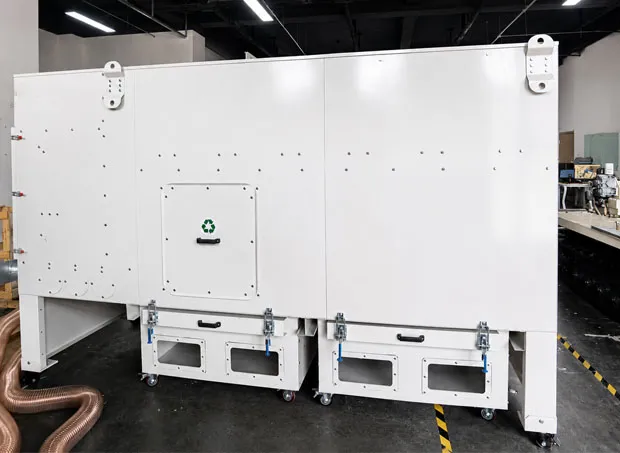
A suction arm dry dust collector is designed around one principle:
Capture dust before it becomes airborne.
Many industrial processes create dust directly at the workstation.
Examples include:
The mobile suction arm dry dust design allows operators to move the extraction arm close to the dust source.
This creates several benefits:
The suction arm captures dust directly where it is generated.
This reduces:
A mobile suction arm dry dust system can move between different workstations.
It is suitable for:
Dust and fume exposure can affect workers’ health.
A properly designed dust collection system helps create cleaner working conditions.
The S-Series works as a practical portable dust extractor for factories that need flexible dust removal without installing permanent duct systems.
A fixed dust collection system is suitable for large production lines. However, many industrial users need equipment that can adapt to changing production requirements.
A portable dust collector provides several advantages.
A mobile dust collector does not require complicated duct installation.
Operators can place the unit near:
Manufacturing environments often change.
A portable dust collection system allows companies to move equipment without rebuilding the entire dust extraction system.
For smaller facilities, installing a large centralized system may not always be practical.
A portable dust collection system can provide efficient dust control with lower installation requirements.
Compared with brands such as Nederman and Camfil, Senserui focuses on factory-direct customized dust collection solutions with engineering support for international industrial customers.
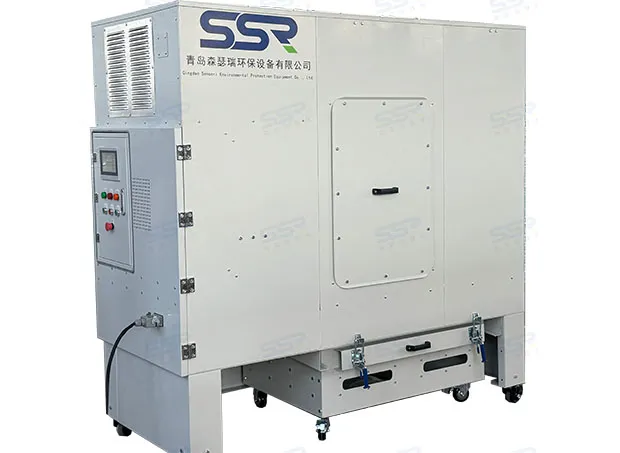
En S-Series Dust Collector is mainly designed for dry dust applications.
Common materials include:
| Application | Dust Type |
| Grinding | Grinding dust |
| Welding | Welding fume |
| Trabajos en madera | Wood dust |
| Polishing | Fine dust |
| Fabrication | Industrial particulate |
| Machinery processing | Standard dust |
Different materials produce different dust characteristics.
For example:
The S-Series can be configured for many industrial applications, but users should always consider:
The filtration system is the core component that determines the performance of any dust collector. A powerful fan alone cannot provide effective dust collection if the filter cannot separate fine particles efficiently.
The S-Series Dust Collector uses a high-efficiency filtration design to capture dust particles, dry dust, and airborne particulate generated during industrial processes.
The filtration process includes:
This process improves:
For many industrial users, choosing the correct filter is more important than simply choosing a larger machine.
A properly selected filter helps maintain stable airflow and prevents performance reduction caused by excessive dust accumulation.
En S-Series Dust Collector uses cartridge filtration technology for efficient dust separation.
Compared with traditional filter bags, cartridge filters provide:
The cartridge design is suitable for applications generating:
A good filtration system should maintain performance even when dust loading increases.
The S-Series incorporates a practical cleaning approach to extend filter service life.
Depending on the application, cleaning methods may include:
Proper maintenance ensures that the dust collector continues to provide stable airflow.
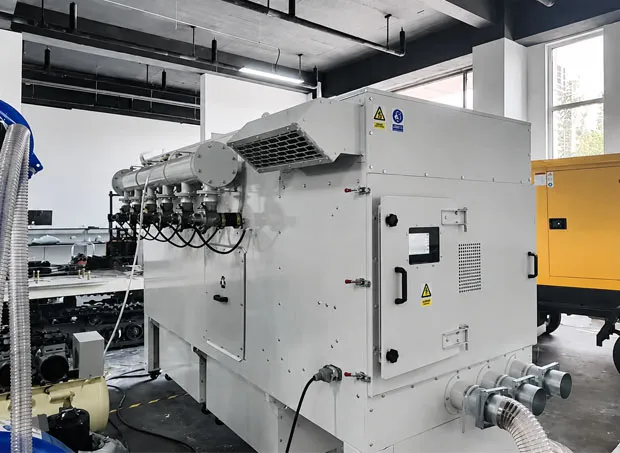
Industrial workshops often produce very small particles that are difficult to remove through normal ventilation.
Fine dust can remain airborne for long periods.
Without effective filtration, dust may:
A high-efficiency filtration system helps capture dust before it enters the surrounding environment.
This is especially important for:
The S-Series provides a compact solution for companies that need efficient air filtration without installing a large industrial dust collection system.
For factories with changing production requirements, mobile equipment offers additional flexibility.
The S-Series Dust Collector is designed for various industrial applications where dust and fume are generated near operators.
Grinding operations produce:
A grinder connected with a mobile dust collector can capture dust directly at the workstation.
This reduces airborne contamination and improves working conditions.
Welding creates welding fume containing very fine particulate.
The suction arm allows operators to position extraction close to the welding point.
This improves fume capture efficiency and reduces exposure.
In woodworking environments, machines such as:
can produce large amounts of wood dust.
The S-Series can support woodworking dust collection by capturing dust near the machine.
Certain food processing operations can generate dry particulate.
Examples include:
For these applications, proper filtration selection is important to maintain safe and compliant operation.
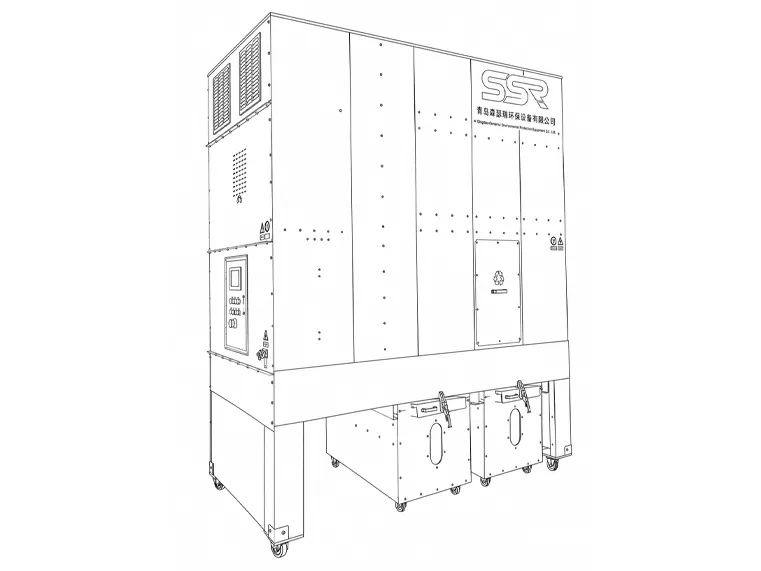
Combustible dust requires special attention during equipment selection.
Materials such as:
may create combustible risks under certain conditions.
Companies should evaluate:
The S-Series Dust Collector should be selected according to the specific dust type and application.
For industrial environments involving combustible dust, additional safety considerations may include:
Senserui focuses on providing safe and compliant industrial dust collection solutions based on customer production conditions.
Equipment selection should always consider regulatory compliance and workplace safety requirements.
Choosing between a mobile dust collector and a centralized dust collection system depends on production scale.
A portable solution is suitable for:
Ventajas:
A centralized system is better for:
A centralized system usually includes:
Comparison:
| Característica | S-Series Mobile Dust Collector | Centralized System |
| Installation | Simple | Complex |
| Mobility | Excellent | Limited |
| Best Use | Single workstation | Multiple machines |
| Expansion | Flexible | Requires planning |
| Investment | Lower | Higher |
For many small and medium industrial users, a mobile dust collector provides an efficient first step before investing in a larger system.
Many suppliers offer portable dust extraction equipment, including brands such as Nederman and Camfil.
However, industrial customers often require more than standard equipment.
They need:
Senserui China provides customized industrial dust collection solutions for global customers.
Our customers include:
We help customers select suitable equipment based on:
En S-Series Dust Collector provides a practical option for customers looking for:
Before purchasing a dust collector, companies should evaluate several factors.
Understand where dust is generated:
Different dust types require different filtration solutions.
Consider:
Airflow affects capture performance.
Important factors include:
A flexible system allows companies to adapt when:
Senserui engineers can help customers select the right configuration according to actual industrial requirements.
The S-Series Dust Collector is used for collecting dry dust, fume, and particulate generated from grinding, welding, woodworking, polishing, and other industrial applications.
It provides mobile dust extraction with suction arm source capture.
Yes. The S-Series can support woodworking applications by capturing wood dust near machines such as saws and sanders.
For large woodworking production lines, a larger dust collection system may be more suitable.
A portable dust collector is designed for individual workstations and flexible movement.
A centralized dust collection system is designed for multiple machines connected through ductwork.
The best choice depends on factory size, dust generation, and production requirements.
Yes. With suitable configuration, the suction arm can capture welding fume near the welding source.
Source capture helps reduce airborne contaminants and improves workplace air quality.
The S-Series uses filtration solutions designed for industrial dry dust applications.
Depending on requirements, cartridge filters and other filtration options can be selected.
How do I select the correct mobile dust collector?
Selection depends on:
Senserui can provide customized recommendations based on your application.