Para una respuesta más rápida, incluya su WhatsApp o Skype en su mensaje para que podamos contactarle lo antes posible.
Para ayudarnos a responder más rápido, por favor deje su WhatsApp, correo electrónico o detalles del proyecto. Normalmente respondemos dentro de 24 horas. Para consultas urgentes, contáctenos por WhatsApp: +8617862411260 o WeChat: +8617862411260. llámenos directamente.
Lily| Founder, Senserui | Published: 18 August 2026 · Last reviewed: 18 August 2026 Technical review: Senserui Engineering Team
A welding dust collector is a filtration system that captures metal fume at the arc and separates it from the airstream before discharge. What distinguishes welding duty from general dust extraction is ignition: the same ducts carry sparks, embers and reactive metal dust, so spark detection and explosion relief are selection criteria, not accessories.
The term covers two different machines that share a name.
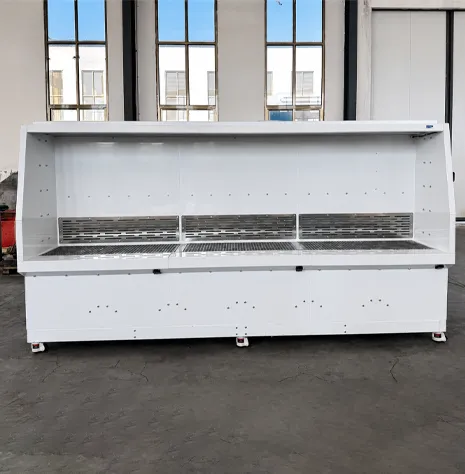
A fume extractor captures the plume at or near the arc, filters it, and either returns the air to the shop or discharges it. Its defining constraint is capture distance, because welding fume is buoyant and disperses within a second or two of leaving the weld pool.
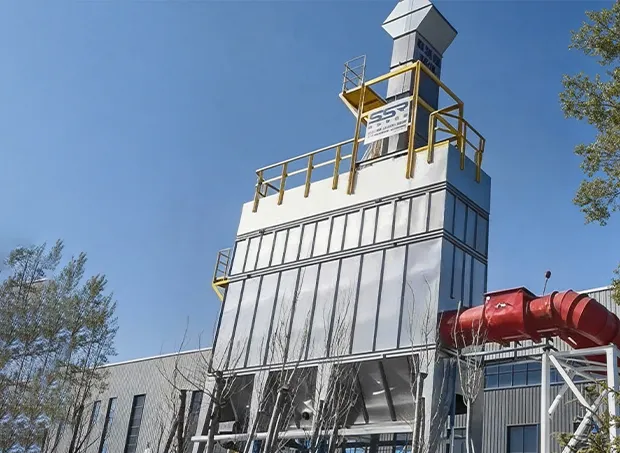
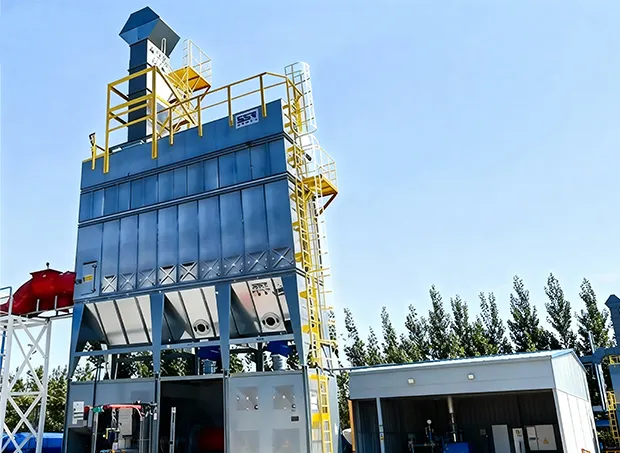
A centralized dust collection mainframe serves a network of ducted pickup points across a fabrication floor — welding stations, plasma tables, grinding and polishing benches — into one filtration and discharge unit.
Both are “welding dust collectors.” They are selected on different criteria, and a shop that buys the second when it needed the first ends up with excellent filtration and poor capture, which changes nothing in the operator’s breathing zone.
There is a third thing worth separating out. Welding fume is not welding dust. Fume is metal vapour that condenses into sub-micron particles — mostly oxides of whatever is being melted. Dust is mechanically generated: grinding, cutting, deslagging, wire-brushing. A fabrication shop produces both, usually within the same three metres, and they load filter media differently and carry ignition risk differently.
Look at the product pages that rank for this term and the pattern is consistent: filter efficiency figures, cartridge media descriptions, model tables. Spark control appears as a bullet on the feature list. It is almost never explained as a decision — as in, which ignition controls your shop needs and why that follows from what you weld.
That is backwards, because the filtration is the part most suppliers can deliver. The ignition path is the part that differs by shop.
Consider what physically travels down a duct in a fabrication plant. Fume, yes. Also: spatter that has not fully cooled, grinding sparks, slag fragments from cutting, and accumulated fine metal particulate lining the duct wall and coating the filter media. That combination puts an ignition source and a fuel bed in the same enclosed volume, and the collector is at the end of it.
NFPA 660 — Standard for Combustible Dusts and Particulate Solids, 2025 Edition, published by the National Fire Protection Association, is the consolidated standard covering fire and explosion hazards for combustible particulate solids, including metal dusts, and it addresses dust hazard analysis, explosion protection and equipment provisions. In the United States, OSHA publishes standards and guidance on combustible-dust hazards under general-industry regulations. For equipment in or sold into the EU, the ATEX framework (Directive 2014/34/EU, European Commission) governs equipment intended for use in potentially explosive atmospheres.
The dust hazard analysis is the step that turns those documents into an equipment list. It belongs before the quotation, not after the order.
This is the part the catalogue pages skip. Your ignition control requirement is a function of what you weld, not of collector size.
Input 1: The process
| Process | What reaches the duct | Design consequence |
| GMAW / MIG | High fume volume, hot spatter | Spark control on branches serving the station |
| GTAW / TIG | Low fume, minimal spatter | Capture-focused; ignition risk driven by adjacent operations |
| FCAW / flux-cored | High fume plus slag particles | Heavier duct loading; slag fragments arrive hot |
| Plasma and oxy-fuel cutting | Sparks and molten ejecta at high velocity | Spark control is not optional |
| Grinding and deslagging | Continuous spark stream, mechanical metal dust | The dominant ignition source in most fabrication shops |
A shop that thinks of itself as “a welding shop” usually has grinding running more hours than the arcs do. Grinding is where the sparks come from, and if the grinding stations share ductwork with the welding stations, the whole network inherits that risk.
Input 2: The base metal
Carbon steel dust behaves relatively predictably. Aluminium, magnesium and titanium do not. Fine particulate from these metals is reactive, and combining it with steel dust or with moisture inside a collector creates conditions that a general-purpose specification does not cover. Stainless produces chromium and nickel-bearing fume, which is a health-exposure question as much as an ignition one.
The practical rule: aluminium and magnesium processing should not share a collection system with ferrous work without the mixing question being examined explicitly during the dust hazard analysis. This is the single most common specification error in mixed-material fabrication shops.
Input 3: The coating
What is on the metal before the arc touches it changes the fume composition entirely:
Galvanized — zinc oxide fume, a health issue at exposure level and a rapid filter-loading issue
Primed or painted — organic decomposition products in the airstream, which is closer to a VOC problem than a dust problem
Oiled or lubricated stock — oil mist condenses on filter media, blinding it and making the dust cake tacky rather than free-releasing
Plated or coated with unknowns — the case where a safety data sheet review is worth the delay
Oily stock deserves particular attention, because the failure is slow. The media loads, pressure drop climbs, airflow falls, capture degrades, and by the time anyone connects the symptom to the cause, the cartridges are unrecoverable.
| Point-of-source (W Series) | Centralized network (CZ Series) | |
| Rated power | 1.1–3 kW | 30–150 kW |
| Airflow | 700–2,000 m³/h | 30,000–150,000 m³/h |
| Published dimensions | approx. 700 × 350 × 1,360 mm | L approx. 3,500–13,000 mm, W approx. 2,400 mm, H approx. 8,500 mm |
| Published noise | — | ≤80 dB |
| Serves | One welding, grinding or metalworking point | A ducted plant-wide network |
| Capture quality | Highest — the hood sits at the arc | Depends entirely on hood design at each station |
| Ember travel distance | Short; the filter is metres from the source | Long; embers can travel the length of the main |
| Stated safety features | Compact localized unit | Spark detection, chain-break detection, explosion relief, emergency-stop protection |
| Flexibility | Moves with the work | Fixed; relocating a station is a duct project |
| Failure mode | One station down | Production floor down |
| Best fit | Job shops, variable work positions, small station counts | Fixed-layout fabrication with many simultaneous stations |
The comparison inverts depending on which risk you are managing. Point-of-source capture wins on breathing-zone concentration and loses on centralized safety instrumentation. A centralized system carries the ignition instrumentation but also carries the ember further before anything intercepts it.
Compared with the portable single-arm fume extractors common in smaller job shops, a centralized mainframe removes the contaminant from the building rather than filtering and returning it, consolidates maintenance to one point, and puts spark and explosion protection at the collector. What it gives up is the ability to follow the work, which for a shop welding large weldments in variable positions is not a small loss.
Most fabrication plants above a certain station count end up with both: centralized extraction for the fixed benches and grinding stations, portable units for the work that moves.
| Parameter | Published figure |
| Models | CZ30 / CZ60 / CZ90 / CZ120 / CZ150 |
| Rated power | 30–150 kW |
| Airflow | 30,000–150,000 m³/h |
| Equipment length | approx. 3,500–13,000 mm |
| Width | approx. 2,400 mm |
| Height | approx. 8,500 mm |
| Noise level | ≤80 dB |
| Positioned for | Welding, cutting, grinding, polishing, heavy metal fabrication |
| Stated safety features | Spark detection, chain-break detection, explosion relief, emergency-stop protection |
The four safety items are worth reading individually rather than as a block, because they address four different failures.
Spark detection watches the airstream for ignition sources travelling toward the filter. It is the control that maps directly to the process table above: a shop running plasma cutting or continuous grinding into the network needs it in a way that a low-volume TIG shop does not.
Chain-break detection monitors the mechanical discharge conveying system. This one is easy to overlook because it sounds like a maintenance convenience. It is not. A stalled discharge means collected material accumulates instead of moving out, which is precisely the fuel-bed condition that makes an ignition source consequential rather than harmless.
Explosion relief is the acknowledgement that the first two can fail. It provides a designed path for pressure to go somewhere other than through the collector housing and back into the building.
Emergency-stop protection shuts the system down without leaving the fan pulling air across a developing event.
Height is the practical planning constraint: approximately 8,500 mm. In an existing fabrication building, measure the clear height under the lowest obstruction — roof truss, crane rail, sprinkler main — before the layout is drawn.
Where the collected material feeds a storage silo, the Serie MS dust bin system lists explosion relief, fire suppression, temperature monitoring and water-pressure monitoring among its stated safety features. For individual grinding and polishing stations, the PD Series standalone collector includes a spark interception structure, and the PW Series grinding table has an integrated fire-arresting structure with replaceable filter elements.
Company-level compliance covers ISO 9001:2015 quality management and CE compliance, with explosion protection designed based on ATEX principles. Product-specific certificate numbers, issuing bodies and notified-body references are not published. That phrasing distinction matters during procurement, and it applies to every supplier you evaluate: “designed based on ATEX
principles” and “ATEX certified” are different claims. Request the certificate if your project needs one.
Price is available on request based on system configuration and project requirements. Airflow, material type, layout, ducting, filtration and safety configuration all move the number too much for a published per-model figure to mean anything.
Assuming a spark arrestor closes the question. A mechanical arrestor addresses trajectory. It does not detect, and it does not act on the material already sitting in the collector.
Running aluminium and steel into one collector because both are “metal.” Different reactivity, different hazard profile. Examine it during the dust hazard analysis rather than after.
Sharing ducts between grinding and welding without accounting for the spark load. Grinding usually contributes more ignition sources than the arcs do, and it often runs longer hours.
Specifying against fume and forgetting the mechanical dust. Filter media selected for sub-micron fume loaded with grinding particulate performs differently and fails earlier.
Ignoring what is on the metal. Oiled stock, galvanised coating and primer each change the filtration duty, and none of them appear in an airflow calculation.
Treating the discharge system as a housekeeping detail. Chain-break detection exists because the discharge is a safety component.
Centralized extraction with integrated ignition control gives a fabrication plant one maintenance point, contaminant removed from the building rather than recirculated, and instrumentation on the ignition path. It costs:
For a shop of six benches doing variable work, portable units and a serious housekeeping routine may genuinely be the better answer. For fixed-layout production with grinding running most of the shift, the arithmetic usually goes the other way.
A: A fume extractor captures the plume at or near the arc and is selected on capture distance. A dust collection mainframe serves a ducted network of stations and is selected on total airflow, static pressure and safety configuration. Many fabrication plants run both.
A: It depends on what feeds the network. Plasma or oxy-fuel cutting, flux-cored welding and continuous grinding all send ignition sources into the duct. Low-volume TIG work on clean steel is a different case. The dust hazard analysis is what turns that judgement into a specification.
A: Not without examining it explicitly. Fine aluminium particulate is reactive and behaves differently from ferrous dust, and mixing the two inside a collector introduces conditions a general specification does not address. This is the most common specification error in mixed-material shops.
A: It monitors the mechanical discharge conveying system. If the discharge stalls, collected material accumulates in the collector instead of moving to storage, which is the fuel-bed condition that turns a stray ember into an event.
A: The published wording is that explosion protection is designed based on ATEX principles. Product certificate numbers and issuing bodies are not publicly disclosed. Where certified equipment is required, request the specific document.
A: It depends on hood type and capture distance rather than on the welding process alone. Branch airflow is calculated from the connection area and the required transport velocity, then totalled across the network with a justified simultaneity factor.
A: Available on request based on system configuration and project requirements.
A concrete first step: walk the floor during a normal shift and write down, for each station, what is being welded or cut, what coating is on it, and how many hours of grinding happen nearby. That page of notes is what a dust hazard analysis works from, and it is the input that determines your ignition controls. Shops that also run painting or powder coating have a parallel VOC treatment question that a dust system does not address, and it is worth scoping the two together rather than sequentially.
Senserui is an industrial environmental equipment manufacturer specializing in dust collection and VOC treatment systems. His work focuses on engineering-driven system design, modular standardization, manufacturing consistency, and the development of safer and more maintainable industrial air-pollution-control solutions. Senserui was founded in 2017 and manufactures from an approximately 10,000 m² production base in Qingdao, China, with in-house airflow, noise and filter testing before delivery. Technical review by the Senserui Engineering Team, covering system engineering, process planning, quality control, assembly and commissioning, after-sales support and IoT-based system operations.