Để có phản hồi nhanh hơn, xin vui lòng bao gồm số WhatsApp hoặc Skype của bạn trong tin nhắn của bạn để chúng tôi có thể liên lạc với bạn càng sớm càng tốt.
Để giúp chúng tôi phản hồi nhanh hơn, xin vui lòng để lại WhatsApp, email hoặc chi tiết dự án của bạn. Chúng tôi thường phản hồi trong vòng 24 giờ. Đối với các yêu cầu khẩn cấp, liên hệ với chúng tôi qua WhatsApp: +8617862411260 hoặc WeChat: +8617862411260. gọi cho chúng tôi trực tiếp.
A cyclone separator removes coarse, heavy particles by spinning the airstream and letting centrifugal force drop them out before the air reaches final filtration; it cannot reach the emission levels fine filtration achieves on its own, which is why the real question is usually whether to add one in front of a filtration system, not instead of one.
A cyclone works purely on particle mass and momentum. Air enters tangentially, spins down a conical body, and centrifugal force throws heavier particles outward into the collection point at the bottom while the lighter, cleaner air exits through the center. No filter media is involved, which means no differential pressure buildup from media loading and no replacement filter cost for whatever the cyclone actually captures.
That mechanism has a hard physical limit. Cyclones are effective against large and mid-size particles — coarse sawdust, chips, heavier metal shavings — but centrifugal separation loses effectiveness rapidly as particle size drops into the fine and ultrafine range. A well-designed industrial cyclone can commonly reach separation efficiencies in the 90%+ range for coarse material, but the fine fraction that gets through is exactly the fraction driving most emission-compliance numbers. A cyclone alone, with no downstream filtration, is not a compliant final-stage solution for most industrial dust regulations — it’s a pre-separation stage.
The case for putting a cyclone ahead of a filtration system comes down to filter life. Filter media loaded primarily with coarse debris clogs faster and needs more frequent replacement or cleaning cycles than media that only sees fine particulate. Stripping out the coarse fraction before it ever reaches the cartridge or bag stage extends media service intervals and reduces the differential-pressure climb that drives cleaning-cycle frequency.
This pays off most clearly in three conditions:
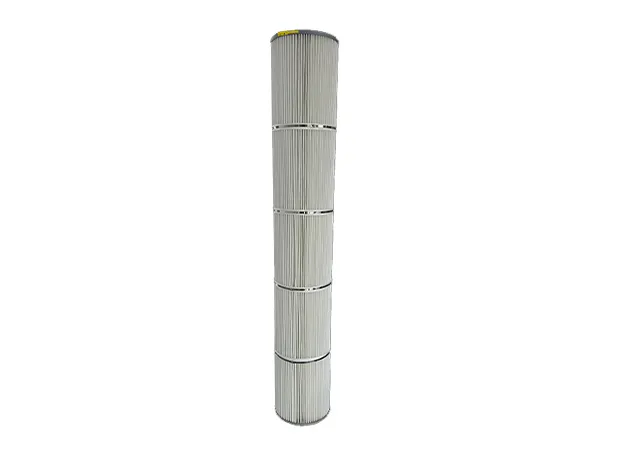
The reverse case is just as real and gets skipped less often in vendor material than it should. A cyclone is a static piece of ductwork with a spin chamber — it adds resistance to the airflow path regardless of whether it’s removing meaningful mass. If your process generates predominantly fine or ultrafine dust — sanding fines, CNC dust, powder-handling operations — a cyclone stage removes very little of what’s actually in the airstream, because that’s precisely the particle range cyclones are weakest against. What you’re left with is the pressure-drop cost of the cyclone with almost none of the filter-life benefit.
Compared with skipping pre-separation entirely and sizing the filtration stage directly for the actual dust load, adding an unnecessary cyclone in a fine-dust-dominant process increases fan energy draw for the same net airflow delivered at the workstation — a cost that shows up on every hour of operation, not just on the filter-replacement line item.
A frequent assumption, especially among buyers comparing shop-equipment cyclone units against full filtration systems, is that a cyclone alone gets a facility to a compliant emission number. It doesn’t, for the physical reason described above — fine particulate is exactly what escapes centrifugal separation. OSHA’s combustible-dust guidance and most facility air-quality permitting frameworks are written around fine particulate exposure, not coarse material, which is the category cyclones are least effective against. Treating a cyclone as a standalone compliance solution, rather than a pre-separation stage feeding a properly sized filtration system, is a design gap that tends to surface during a compliance inspection rather than during commissioning.
| Dimension | Cyclone Pre-Separation | Fine-Particulate Filtration (e.g. CP Series) |
| Mechanism | Centrifugal separation, no media | Media-based filtration for fine/ultrafine particulate |
| Effective particle range | Coarse to mid-size (chips, shavings, heavy sawdust) | Fine and ultrafine (sanding dust, CNC fines, powders) |
| Typical coarse-particle efficiency | Commonly 90%+ for larger particles | Not the primary design target |
| Fine-particle efficiency | Drops sharply below a certain particle size | Manufacturer-published target: <5 mg/m³ under suitable system conditions |
| Ongoing consumable cost | None (no media) | Filter media replacement/cleaning cycle |
| Best role | Pre-separation stage ahead of fine filtration | Final-stage filtration, standalone or downstream of pre-separation |
| Pressure drop contribution | Adds resistance regardless of dust profile | Increases as media loads; managed via cleaning cycle |
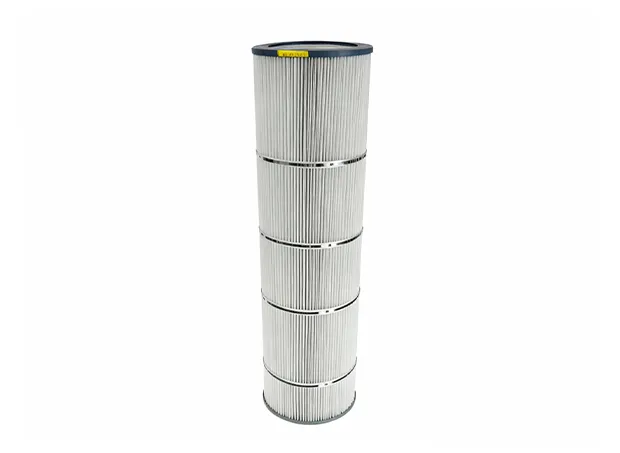
A: Only for processes where the dust is coarse enough that centrifugal separation captures the bulk of it — and even then, whatever fine fraction escapes still enters the workspace air unless a compliance requirement forces additional filtration. For most industrial fine-particulate regulations, a cyclone alone doesn’t reach compliant emission levels.
A: Only when coarse particulate is a meaningful share of the total dust load. For fine-dust-dominant processes, the coarse fraction a cyclone removes is small enough that the filter-life benefit is minimal, while the pressure-drop cost is constant regardless of dust profile.
A: Published industrial cyclone data commonly shows 90%+ efficiency against coarse particles, with efficiency dropping substantially for fine and ultrafine dust — the fraction most emission standards are written around. A specific compliance number depends on your dust’s particle-size distribution and can’t be generalized without testing.
A: It depends on coarse-particle volume more than shop size. A small operation generating mostly fine dust (sanding, CNC) is unlikely to see payback from a cyclone stage; a larger operation with heavy coarse-material output (rough milling, planing) is more likely to recover the cost through extended filter life.