Để có phản hồi nhanh hơn, xin vui lòng bao gồm số WhatsApp hoặc Skype của bạn trong tin nhắn của bạn để chúng tôi có thể liên lạc với bạn càng sớm càng tốt.
Để giúp chúng tôi phản hồi nhanh hơn, xin vui lòng để lại WhatsApp, email hoặc chi tiết dự án của bạn. Chúng tôi thường phản hồi trong vòng 24 giờ. Đối với các yêu cầu khẩn cấp, liên hệ với chúng tôi qua WhatsApp: +8617862411260 hoặc WeChat: +8617862411260. gọi cho chúng tôi trực tiếp.
Dust looks small, but it can become a big factory problem. It spreads in the air, settles on machines, affects workers, and may create fire or explosion risks. A well-designed dust collector helps capture dust, clean the air, and keep production safer.
An industrial dust collector works by pulling dusty air from the source, moving it through ducts, separating dust particles with a filter or cyclone force, and returning or exhausting cleaner air. A complete dust collection system includes hoods, ducts, an industrial blower, filter media, a cleaning system, dust discharge, and control systems.
Một máy thu bụi công nghiệp is a machine that removes dust and other particles from dirty air. Factories use it when cutting, grinding, welding, polishing, mixing, crushing, sanding, conveying, or packing materials. The goal is simple: collect dust before it spreads through the work environment.
A dust collector is not just a metal box with a fan. It is part of a larger dust collection system. That system may include capture hoods, pipes, valves, an industrial blower, a dust collector filter, a dust bin, sensors, and a control panel. When all parts match the process, the system can remove dust with stable airflow and lower maintenance cost.
In industrial applications, dust collectors are used for metal dust, wood dust, chemical powder, food powder, cement dust, plastic dust, battery material dust, welding dust and fumes, and many other materials. The type of dust decides the type of dust collector. This is why a proper project starts with dust testing and process review.
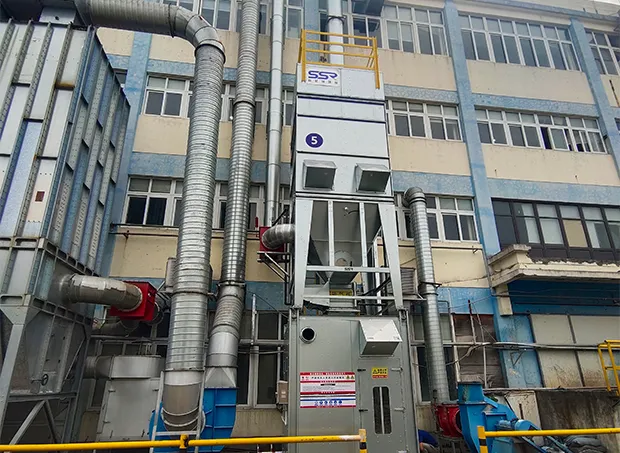
A dust collection system has several key parts. Each part has a job. If one part is poorly designed, the whole system work may suffer. For example, a strong dust collector cannot perform well if the capture hood is too far from the dust source.
The main parts include:
A good hệ thống thu bụi is balanced. Airflow must be strong enough to extract dust, but not so high that energy is wasted. Duct speed must keep dust moving, but not damage the filter. The system uses engineering, not guesswork.
Cartridge dust collectors use pleated cartridge filters. The pleated design gives a large filter area in a compact space. This makes cartridge collectors useful for metalworking, welding fume extraction, laser cutting, polishing, sanding, and many workshop processes.
In a cartridge dust collector, dusty air enters the collector and passes through the cartridge dust filter. The filter captures dust particles from the air. Clean air moves out through the outlet. When pressure rises, the pulse jet dust cleaning system sends compressed air through the cartridge to shake off accumulated dust.
Cartridge-style dust collectors are often easier to install than large baghouses. They take less floor space and work well for finer dust. But they may not be the best option for very sticky dust, very hot dust, or very heavy dust loading unless the system is specially designed.
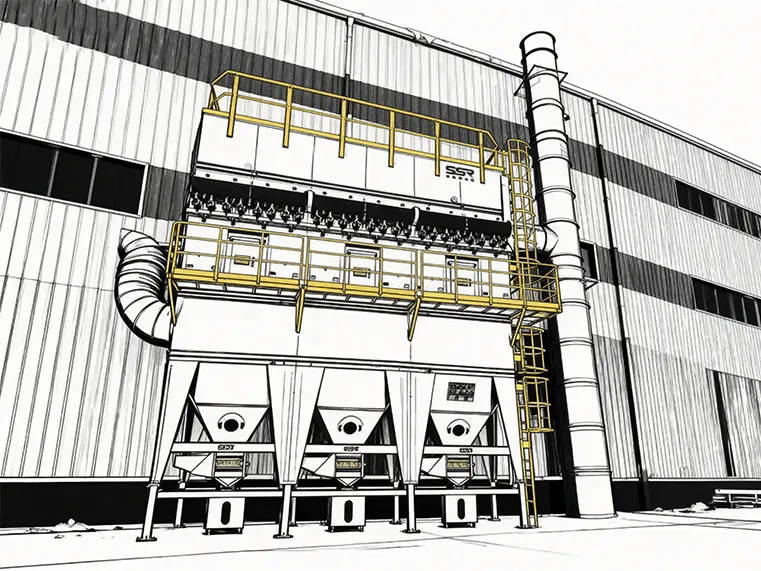
A dust collector cannot run well if the filter stays blocked. That is why the cleaning system is important. The cleaning system removes dust from the filter surface and keeps airflow stable.
The most common cleaning method is pulse-jet cleaning. A pulse-jet collector uses compressed air pulses. These pulses hit the filter from the clean side. The shock shakes dust off the filter, and the dust falls into the hopper. This process keeps the dust collector’s pressure drop under control.
Other cleaning methods include mechanical shaking and reverse air cleaning. The right method depends on the type of dust collector, the filter media, the dust loading, and the operating schedule. Proper dust cleaning improves the efficiency of your dust collection and reduces downtime.
Dust collectors help improve air pollution control, but they also support worker safety and production stability. Harmful dust can affect breathing, visibility, product quality, sensors, motors, and electrical cabinets. Fugitive dust can spread to areas far away from the machine.
Some dust can also burn. Combustible dust may create dust explosions when fine dust becomes airborne and meets an ignition source. OSHA notes that combustible dust can present explosion hazards under certain conditions. That is why safe design may include spark detection, explosion venting, isolation valves, anti-static filter media, grounding, and temperature monitoring.
A reliable dust collection device does more than filter dust. It helps keep dust under control, supports cleaner air, and protects long-term factory operation.
Senserui China is an industrial dust collection and VOCs treatment manufacturer in China. We support medium- and large-scale industrial manufacturers, environmental engineering contractors, system integrators, distributors, and importers in Europe, North America, the Middle East, Southeast Asia, and Latin America.
Our customers usually care about four things: compliance, safety, energy cost, and stable operation. They do not only ask, “What is the price of a dust collector?” They ask deeper questions: Will it meet emission rules? Can it handle combustible dust? Can the control panel monitor pressure and alarms? Can the system expand later? Can the manufacturer support us after delivery?
Senserui China provides industrial dust collection, VOCs control, modular system design, factory-direct supply, remote technical support, and customized engineering. For overseas projects, this matters. A good supplier should not act like a one-time trader. A good supplier should help you build a long-term solution.
The main purpose of a dust collector is to capture dust, filter dirty air, and collect dust in a safe container. It helps improve air quality, reduce machine contamination, protect workers, and support pollution control.
Một máy thu bụi công nghiệp pulls dusty air through hoods and ducts. The air enters the collector. A filter, cyclone, or wet separation stage removes dust particles. Cleaned air exits the system, while collected dust drops into a bin or hopper.
A baghouse dust collector uses long filter bags and is often used for high dust loading and large airflow. A cartridge dust collector uses pleated cartridge filters and is often compact, efficient, and suitable for finer dust in workshops.
Yes. A central dust collection system can serve many machines if the airflow, duct layout, hood design, and fan pressure are calculated correctly. This is common in factories with multiple dust sources.
A cyclone dust collector is useful when dust is large, heavy, abrasive, or present in high volume. It often works as a pre-separator before a filter collector to reduce filter load.
Yes. Combustible dust can create fire or explosion risks when fine dust becomes suspended in air and meets an ignition source. Factories handling wood, metal, food powder, plastic powder, or chemical powder should review combustible dust safety early.