Daha hızlı bir yanıt almak için lütfen mesajınıza WhatsApp veya Skype'ınızı ekleyin, böylece sizinle mümkün olan en kısa sürede iletişim kurabiliriz.
Hızlı cevap vermemize yardımcı olmak için lütfen WhatsApp, e-posta veya proje detaylarınızı bırakın. Genellikle 24 saat içinde yanıt veririz. Acil talepler için, WhatsApp üzerinden bizimle iletişime geçin: +8617862411260 veya WeChat: +8617862411260. doğrudan arayın.
Dust may look small, but it can create big factory problems. It can cover machines, harm air quality, slow work, and raise safety risks. When dust keeps coming back, the real solution is not more cleaning. It is a well-designed dust collection system.
An industrial dust control system works by capturing dust near the source, moving dusty air through ducts, separating dust particles with a filter or cyclone, cleaning the filter, and collecting dust in a safe container. A complete system may include a dust collector, extraction system, fan, ductwork, control panel, and safety devices.
Bir industrial dust control system is a complete set of equipment used to capture, move, filter, and collect dust from factory air. It helps keep dust away from workers, machines, products, and electrical systems. In many industrial environments, it is a key part of pollution control and safe production.
A dust collection system usually includes a dust collector, suction hoods, ductwork, an industrial blower, a filter, a cleaning system, a collection container, and electrical control systems. Some projects also need spark detection, fire prevention, explosion venting, silencers, monitoring sensors, and remote control.
Factories use dust systems in many industrial processes, such as cutting, grinding, polishing, welding, sanding, crushing, mixing, powder conveying, packaging, and material loading. When a process can produce dust, the system should capture dust before it spreads. That is why effective dust control begins at the source, not after dust has covered the floor.
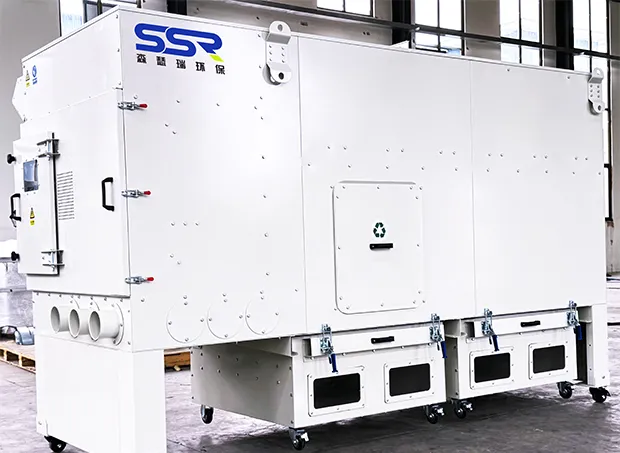
The components of a dust collection system must work together. A strong dust collector will not perform well if the hood is too far from the dust source. A high-quality filter will not help if the fan is too weak. A good dust collector system is balanced from the hood to the outlet.
Main components include:
The size of the dust collector depends on air volume, dust load, dust type, duct length, number of collection points, and duty hours. Bigger is not always better. A proper dust design should use enough airflow to capture dust, but not waste energy.
The filter is the heart of many dust collectors. Dirty air enters the filter area. Air passes through the filter media, but dust particles stay on the surface. Over time, a thin layer called dust cake forms. This dust cake can help catch finer dust, but too much dust cake blocks airflow.
A dust filter must match the type of dust. Some dust is dry and fine. Some dust is sticky. Some dust is hot. Some dust is abrasive. Some dust is combustible dust. Different filter media may be used, such as polyester, PTFE-coated media, anti-static media, flame-retardant media, or high-temperature filter material.
Good filtration and dust cleaning go together. If the filter cleans too little, pressure rises. If it cleans too often, compressed air cost rises and the filter may wear faster. A smart dust collection system should balance cleaning frequency, pressure drop, and filter life.
Cartridge dust collectors use pleated filter cartridges. The pleated shape gives a large filter area in a small space. This makes cartridge dust collectors useful for workshops where floor space is limited and fine dust needs efficient capture.
In a cartridge dust collector, dusty air enters the collector body. The cartridge dust filter captures dust particles from the air. Clean air exits through the outlet. When pressure rises, compressed air pulses clean the filter and drop collected dust into the hopper or container.
Cartridge collectors are often used for welding, grinding, polishing, laser cutting, plasma cutting, powder processing, and other industrial dust collection applications. They are compact, clean, and easy to maintain. But they may not be the best choice for very sticky dust, very hot dust, or very heavy dust unless the system is specially designed.
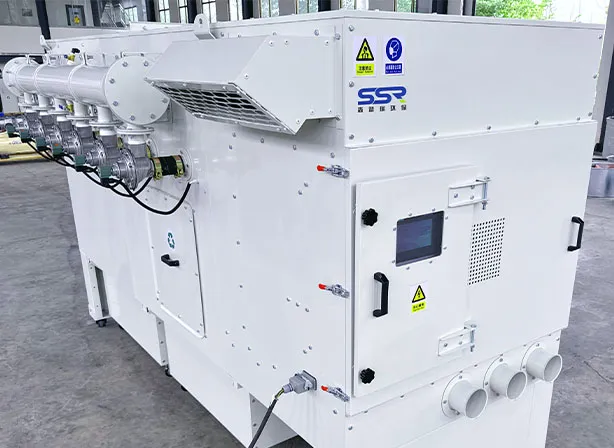
A cyclone dust collector separates dust by spinning air at high speed. Dirty air enters the cyclone body from the side. The air spins. Heavier dust particles move toward the wall and drop down into the hopper. Cleaner air moves upward and exits.
A cyclone is often used before a filter dust collector. It removes larger or heavier particles before they reach the main filter. This lowers the dust load on the filter and can extend filter life. For abrasive dust, a cyclone can also protect the filter from fast wear.
A cyclone works well for heavy dust, coarse dust, wood dust, mineral dust, and large dust and particles. But it may not remove finer dust as well as a high-efficiency filter. In many robust dust extraction projects, the system uses two steps: cyclone first, filter second.
Dust load means the amount of dust carried in the air. If the dust load is high, the dust collector needs enough filter area, hopper volume, and cleaning power. If the filter area is too small, pressure rises fast and suction drops.
Airflow is also critical. If airflow is too low, dust accumulates inside ducts. If airflow is too high, energy cost rises and the filter may wear faster. The goal is stable and proper dust movement, not just strong suction.
Duct design affects the whole system. Long ducts, sharp elbows, small pipe sizes, and poor branch balance increase pressure loss. When pressure loss is too high, the hood cannot capture dust well. Then fugitive dust escapes into the work environment.
Good duct design should:
This is why a dust collection system must be engineered as a complete system. A dust collector is important, but hoods, ducts, fan pressure, filter area, and control logic are just as important.
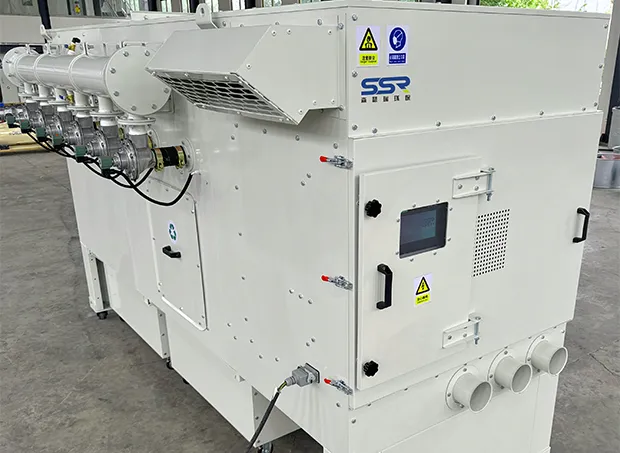
Industrial dust collection systems help factories improve air quality, reduce dust removal work, and support cleaner production. They also help protect workers, machines, sensors, electrical cabinets, finished products, and building surfaces.
Some dust can create serious risks. Combustible dust may burn or explode when fine dust becomes airborne and meets an ignition source. Common forms of dust such as wood dust, aluminum dust, plastic powder, food powder, coal dust, and some chemical powders may be risky under certain conditions.
Important safety design may include:
OSHA guidance notes that dust collectors, ducts, and related equipment that handle combustible dust should be designed to reduce leaks, control dust escape, and relieve explosion pressure safely when needed. For overseas buyers, this is why safety cannot be added at the end. It must be part of the design from the start.
Senserui Çin is a Chinese industrial environmental equipment manufacturer focused on industrial dust collection and VOCs treatment solutions. We serve medium- to large-scale industrial manufacturers, environmental engineering contractors, system integrators, distributors, and importers in Europe, North America, the Middle East, Southeast Asia, and Latin America.
Our customers usually care about more than one machine. They care about compliance, safety, energy use, stable operation, long-term cost, customization, and after-sales support. They need a supplier that understands both equipment and engineering design.
Senserui China supports a wide range of industrial projects, including:
We understand that overseas buyers do not want a one-time equipment trader. They want a long-term manufacturing partner. That is why Senserui China focuses on engineering support, customized solutions, stable equipment, and practical service.
Dust Source
↓
Capture Hood or Extraction Point
↓
Ductwork
↓
Toz Toplayıcı
↓
Filter / Cyclone / Filtration System
↓
Clean Air Outlet
↓
Collected Dust Container
For a real project, Senserui China may add a fan, control panel, pressure sensors, spark detection, explosion protection, silencer, rotary valve, platform, inspection doors, VOCs treatment equipment, and remote monitoring.
Before requesting a quotation, prepare clear project information. This helps the supplier design a better system and avoid wrong sizing.
Recommended checklist:
This checklist makes communication easier. It also helps Senserui China recommend a practical dust collection solution instead of a random standard machine.
Bir industrial dust control system captures dust near the source, moves dusty air through ducts, separates dust with a filter or cyclone, cleans the filter, and stores collected dust in a container. It uses airflow, filtration, and control systems to keep the workshop cleaner.
A dust collector is the main machine that separates dust from air. A dust collection system is the complete setup, including hoods, ducts, fan, filter, dust collector, control panel, safety devices, and dust discharge equipment.
For fine dust, cartridge dust collectors are often a good choice because they use pleated filter cartridges with a large filter area. However, the final choice depends on dust properties, airflow, temperature, moisture, and safety requirements.
A baghouse dust collector is useful when a factory has heavy dust, large airflow, or continuous production. It is common in woodworking, cement, minerals, foundries, biomass, and bulk material handling.
As dust builds on the filter, airflow resistance increases. Filter cleaning removes dust cake from the filter surface. This helps keep suction stable, lowers pressure drop, and extends filter life.
A dust collection system mainly removes dust and particles. VOCs treatment usually needs extra equipment, such as activated carbon adsorption, catalytic oxidation, RTO, or other exhaust gas treatment systems. In many projects, dust removal should happen before VOCs treatment.