Pour une réponse plus rapide, veuillez inclure votre WhatsApp ou Skype dans votre message afin que nous puissions vous contacter dès que possible.
Pour nous aider à répondre plus rapidement, veuillez laisser votre WhatsApp, e-mail ou détails du projet. Nous répondons généralement dans les 24 heures. Pour les demandes urgentes, contactez-nous sur WhatsApp : +8617862411260 ou WeChat : +8617862411260. appelez-nous directement.
A poorly designed workshop dust extraction system can leave workers exposed to grinding dust, welding fume, and airborne particles while wasting energy on oversized equipment. Choosing the wrong industrial dust collector may increase operating costs without improving dust capture performance. The solution is accurate sizing based on real production conditions.
A workshop dust extraction system should be sized according to the number of workstations operating at the same time, the dust generation level, airflow requirements, and layout limitations. Small welding and grinding workshops often achieve better results with W Series compact dust collectors or PD Series standalone collectors installed near individual stations instead of oversized centralized dust collection systems.
The first step in designing an efficient industrial dust collection system is understanding actual production behavior. Many workshops make the mistake of counting every machine in the factory and selecting an collecteur de poussière industriel based on the maximum possible number of stations.
However, the total number of machines does not represent the real dust collection demand.
A workshop may have:
But during normal operation, only three or four stations may run simultaneously.
This difference directly affects dust extraction system sizing.
A correct dust collection system design starts with a simple question:
This number determines the required airflow, filter capacity, and equipment configuration.
For example, a workshop with eight grinding benches may only need a system designed for three active grinding stations if only three operators work simultaneously. Installing a larger collecteur de poussière industriel for all eight stations would increase:
A properly selected industrial dust collection system balances performance and efficiency.
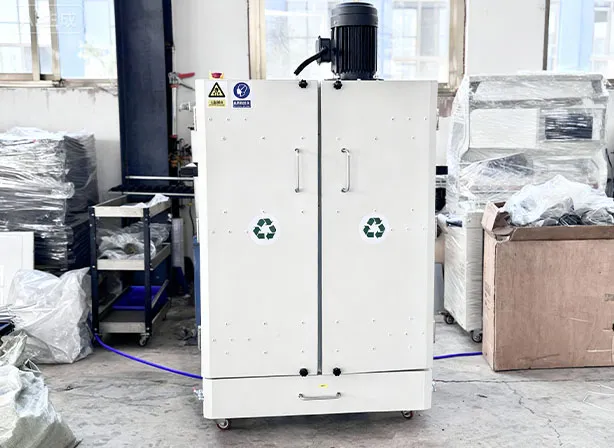
Every machine does not create the same amount of dust.
A welding station may produce fine welding fume, while a grinding machine creates heavier metallic particles. A polishing process may generate continuous fine dust that requires stronger filtration.
Before selecting a dust collector, factories should record:
| Information Required | Purpose |
| Number of active stations | Determines airflow demand |
| Dust type | Determines filter selection |
| Working hours | Determines dust loading |
| Production process | Determines extraction method |
| Workshop layout | Determines installation method |
This approach helps avoid both undersized and oversized dust collection systems.
Senserui China recommends evaluating the actual production environment before selecting a dust collector because every industrial application has different dust characteristics.
After identifying the number of active workstations, the next step is calculating airflow requirements.
A common mistake is selecting a dust collector only by motor power. However, effective dust capture depends on the relationship between:
For welding and grinding applications, the airflow requirement should match the specific dust source.
Senserui’s W Series compact dust collectors cover a 700–2,000 m³/h airflow range across W1.1, W2.2, and W3 models, with rated power from 1.1–3 kW. These units are designed for localized dust extraction applications such as welding stations, grinding areas, and other workstation-level dust control points.
When calculating airflow, use the number of simultaneously operating stations, not the total number of machines.
For example:
One grinding station requires approximately 700–1,000 m³/h
Three active grinding stations require approximately 2,100–3,000 m³/h
The final selection should then be checked against available industrial dust collector specifications.
A high airflow number does not automatically mean better dust collection.
An efficient dust extraction system requires:
Proper Capture Point
The suction inlet should be positioned close to the dust source.
Correct Filter Selection
Fine particles require suitable filter media.
Suitable Airflow Velocity
Too little airflow allows dust to escape. Excessive airflow increases energy consumption.
Correct Layout
Long duct runs create pressure losses.
For this reason, professional industrial dust collection system design considers the entire process instead of only selecting a powerful fan.
After calculating airflow demand, factories need to decide whether to install:
Both solutions have advantages.
A mobile dust collector is suitable for:
Advantages include:
A portable dust collection system allows factories to move extraction equipment as production requirements change.
This is especially useful for repair workshops, fabrication facilities, and small manufacturing plants.
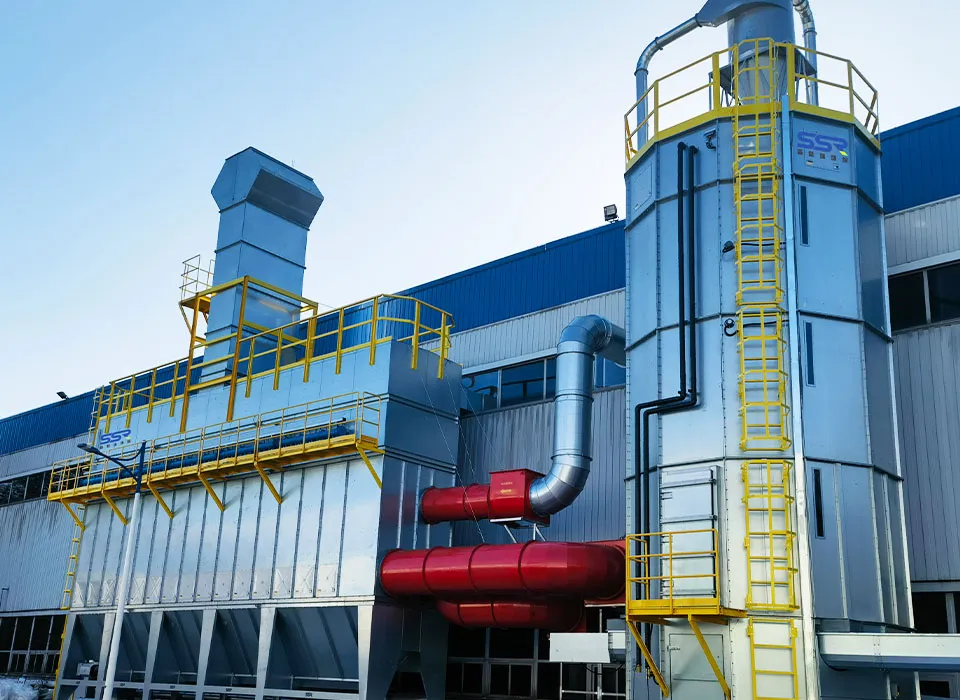
Un centralized dust collection system connects multiple machines through ductwork to one filtration unit.
Advantages include:
Centralized systems are often used when factories operate:
Senserui provides both localized and centralized dust collection solutions depending on customer requirements.
The fourth step in workshop dust extraction system design is planning the physical layout. Even a powerful industrial dust collector cannot perform efficiently if the duct design creates excessive pressure loss or allows dust to escape before reaching the filter.
For welding, grinding, and metal fabrication workshops, layout planning becomes even more important because these processes may generate sparks, hot particles, and combustible dust.
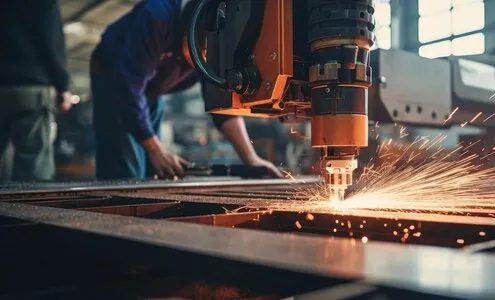
Unlike woodworking dust collection systems, metalworking dust extraction requires additional safety considerations. Grinding operations can produce:
These materials should be captured as close as possible to the dust source.
A short extraction path improves:
A longer duct system requires more fan power and may reduce the effectiveness of the dust collection system.
The most effective dust collection method is capturing dust directly where it is generated.
For example:
A grinding machine creates dust at the grinding wheel. If the dust travels several meters before extraction, more particles enter the workshop environment.
A welding station creates welding fume near the operator. If the suction arm is positioned correctly, the fume can be removed before workers breathe it.
This is why mobile dust collectors and standalone extraction units are popular for welding and grinding workshops.
A mobile dust collector allows operators to position the suction arm directly at:
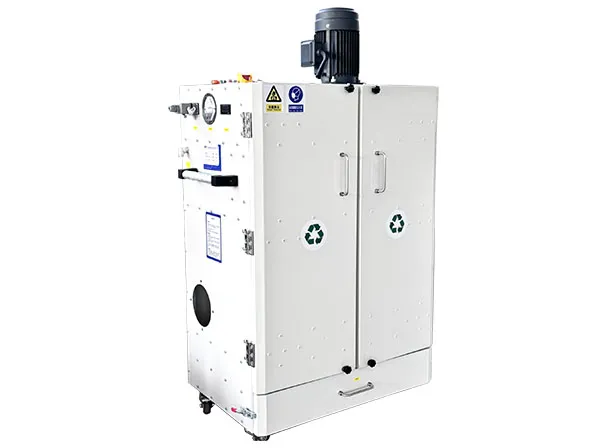
Senserui’s PD Series standalone grinding dust collector is designed around workstation-level extraction, including spark interception structure and dedicated filter elements for grinding applications.
For projects requiring specific airflow or dust loading calculations, customers should confirm final specifications with Senserui engineers because airflow values depend on actual application conditions.
After confirming airflow and layout, the next step is evaluating safety requirements.
A dust extraction system is not only about removing visible dust. Some industrial dust types may create fire or explosion risks if they accumulate in equipment or production areas.
Examples include:
Factories should consider:
For workshops handling combustible materials, safety planning should include proper dust control measures.
Combustible dust can become dangerous when three conditions exist:
Industrial dust collection system design should therefore consider:
Senserui develops industrial dust collection solutions with attention to international safety principles, including ATEX-related explosion protection concepts where applicable.
However, actual certification requirements depend on:
A professional industrial dust collector manufacturer should always evaluate the complete application before recommending equipment.
Before purchasing a workshop dust extraction system, the design should answer four key questions:
1. How Many Stations Operate at the Same Time?
This determines the required airflow capacity.
2. What Dust Type Is Produced?
Different dust types require different filters and collection methods.
Examples:
| Dust Type | Common Application | Recommended Consideration |
| Grinding dust | Metal fabrication | Spark control and durable filters |
| Welding fume | Welding stations | Source extraction |
| Wood dust | Travail du bois | Chip handling and filtration |
| Fine dust | Precision processing | High-efficiency filtration |
3. Should You Use Mobile or Central Extraction?
A mobile dust collector is usually suitable for flexible workshops.
Un centralized dust collection system is more suitable for:
4. How Will Ducts Be Installed?
Before ordering equipment, confirm:
If these details are unclear, the system may become either:
A correct dust collection system design improves long-term performance.
Many workshop owners select an industrial dust collector based on the total number of machines in the facility.
This creates one of the most common sizing mistakes.
For example:
A factory has:
The owner assumes the dust collection system must support all 25 stations.
However, actual production may only use:
The real airflow demand is much lower.
Oversizing creates unnecessary costs:
The best industrial dust collection system is not always the largest one.
It is the one correctly matched to:
Both W Series and PD Series are designed for localized industrial dust collection applications. The correct choice depends on the process and dust characteristics.
| Caractéristique | W Series Compact Dust Collector | PD Series Grinding Dust Collector |
| Main Application | Welding, grinding, localized extraction | Grinding and polishing workstations |
| Installation Type | Individual workstation unit | Standalone workstation collector |
| Airflow | 700–2,000 m³/h (W1.1, W2.2, W3) | Confirm with Senserui engineering team |
| Power Range | 1.1–3 kW | Confirm based on configuration |
| Layout Advantage | Flexible mobile installation | Dedicated grinding dust solution |
| Spark Handling | Suitable for welding and grinding dust points | Designed with spark interception structure |
| Best For | Welding stations, fabrication areas, general dust extraction | Grinding benches, polishing stations |
The W Series compact dust collector is suitable for customers needing:
It works well for:
The PD Series focuses more on grinding applications where spark control is a primary concern.
Typical applications include:
Choosing between the two depends on the actual process rather than only equipment size.
Senserui China specializes in industrial dust collection and VOCs treatment solutions for global industrial customers.
Our customers include:
Unlike simple equipment suppliers, Senserui focuses on application-based engineering.
We evaluate:
Our solutions include:
For international customers, selecting the right dust collection equipment is not only about purchasing a machine. It is about building a reliable dust control system that supports:
A properly designed industrial dust collection system helps factories improve productivity while meeting environmental and workplace requirements.
Can I combine mobile dust collectors and a centralized dust collection system in one workshop?
Yes. Many factories use a mixed approach. Mobile dust collectors are installed at welding, grinding, or temporary stations, while centralized dust collection systems serve fixed production equipment.
This hybrid layout provides flexibility while maintaining efficient dust control.
How do I calculate the correct size industrial dust collector for my workshop?
Start by counting the number of workstations operating simultaneously. Then calculate airflow requirements based on dust type, extraction point design, and production conditions.
Do not size equipment only by total machine quantity.
Is a mobile dust collector suitable for welding and grinding applications?
Yes. A mobile dust collector is commonly used for localized welding fume and grinding dust extraction because it can be positioned directly near the dust source.
What is the difference between a portable dust collector and a central dust collection system?
A portable dust collector serves individual workstations and offers flexibility. A central dust collection system connects multiple machines through ductwork and is better for large industrial operations.
How much does an industrial dust collection system cost?
The price depends on:
A small mobile system costs less than a complete industrial dust collection system with ductwork and multiple stations.
Why should factories choose Senserui for dust collection equipment?
Senserui provides customized industrial dust collection solutions based on real production requirements. We support customers with equipment selection, engineering design, and long-term technical service.